

Cibarious logo

BakingUnited States

Muffins Recipe

Two bowls, a lazy fold and the reason overmixing leaves tunnels in the crumb.

12
servings
35
minutes
5
ingredients

The muffin method: dry bowl, wet bowl, one brief fold

6 min read · 1,187 words

Plate I · Ingredients
  1. All-Purpose Flour
  2. Baking Powder
  3. Butter
  4. Egg
  5. Milk
Curated by CibariousIllustrations byCibarious
12 portions

Ingredients

12 portions, 35 minutes, and the key moments that shape the result.

  • 360 gAll-Purpose Flourweighed, or spooned into the cup and leveled, never scooped
  • 16 gBaking Powderfresh, whisked evenly through the flour
  • 115 gButterunsalted, melted and cooled until just warm
  • 2 eggsEgglarge, at room temperature, beaten with the milk
  • 300 mlMilkwhole, at room temperature
  • 150 gGranulated sugarplain white, measured level
  • 4 gFine saltwhisked into the dry bowl
  • 10 mlVanilla extractoptional, whisked into the wet bowl

What runs when

Bowls
Tin
Oven

Method

  1. Heat the oven hot

    0′–11′

    Set the rack in the middle and heat the oven to 220 °C (425 °F). Give it the full 10 minutes, even if it beeps early.

    Why: A hot start is what pushes the batter up before the crust sets. An oven that is only nearly hot gives flat tops. Read more

  2. Line the tin

    0′–3′

    Drop paper liners into a 12-cup muffin tin. For no liners, grease each cup and the flat top around it with butter.

    Why: Greasing the flat top as well means any batter that spills over lifts off cleanly. Read more

  3. Whisk the dry bowl

    0′–3′

    In a large bowl, whisk 360 g (3 cups) flour, 150 g (¾ cup) sugar, 4 tsp baking powder and ¾ tsp salt for 30 seconds, until you can't see separate white and yellow streaks.

    Why: Mixing the powder in now means you won't need extra strokes later. Every stroke after the wet goes in builds gluten. Read more

  4. Whisk the wet bowl

    3′–8′

    Melt 115 g (8 tbsp) butter and let it cool for 2–3 minutes, until warm to the touch. In a second bowl, whisk 300 ml (1¼ cups) milk, 2 eggs and 2 tsp vanilla. Whisk in the butter last.

    Why: Hot butter cooks the egg into flecks, and cold milk turns it back into lumps. Everything wet should be about room temperature. Read more

  5. Fold, barely

    8′–9′

    Pour all the wet into the dry. With a silicone spatula, scrape down the side and fold from the bottom, turning the bowl as you go. Stop after 10–15 strokes, when the last big pocket of dry flour disappears. It should be lumpy, thick and look underdone.

    Why: Water plus stirring is what makes gluten. A wet muffin batter builds it quickly, so any stroke past the last dry patch buys you a tougher crumb. Read more

  6. Scoop into the tin

    9′–11′

    Scoop about ⅓ cup (85 g) of batter into each cup, until it sits two-thirds to three-quarters full. Don't smooth the tops.

    Why: A rough top browns unevenly in a good way and a moderate fill gives the batter room to dome without spilling. Read more

  7. Bake hot, 5 minutes

    11′–16′

    Slide the tin onto the middle rack. Bake at 220 °C (425 °F) for 5 minutes, until the muffins have domed and the edges start to color.

    Why: The outer edge sets quickly while the center is still liquid, so the middle is pushed up into a dome as the baking powder's second burst of gas expands. Read more

  8. Finish at lower heat

    16′–29′

    Turn the oven down to 190 °C (375 °F) without opening the door. Bake 13–14 more minutes, until deep golden, the tops spring back when pressed and a skewer from the center comes out clean or with a few dry crumbs.

    Why: The lower heat cooks the middle through, to about 95 °C, before the crust can burn. Read more

  9. Rest, then rack

    29′–35′

    Leave the muffins in the tin for 5 minutes, then lift them onto a rack. Eat warm, or let cool completely before storing.

    Why: The crumb is fragile while steaming. Five minutes lets it firm up enough to release, and any longer in the tin makes the bottoms damp. Read more

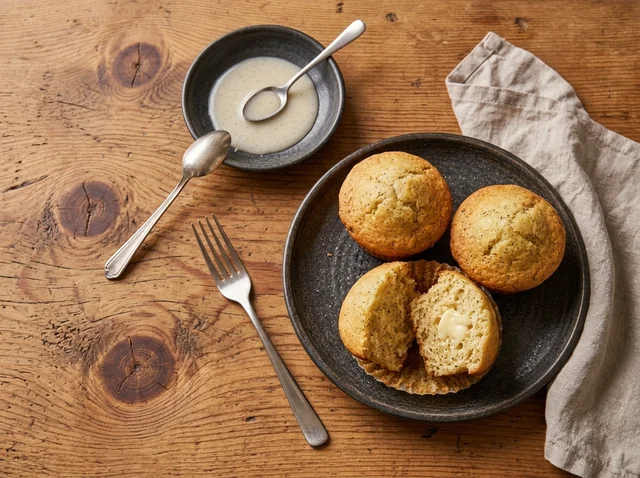
Muffins, finished and plated
Plate II · The finished dish

Why It Works This Way

You have the recipe. Here's why it works, and what happens when you change it.

The Fold

A muffin batter is meant to look wrong. The fold is the moment you stop mixing before it starts to look right.

Flour's two main proteins, glutenin and gliadin, join into gluten as soon as they take up water and get moved around. A muffin batter is wet, so it happens fast. Every stroke lines the strands up and makes them longer and more elastic.

In the oven that elastic network traps the steam and carbon dioxide and channels them toward the surface. Gas that is trapped in a strong network forms long, thin tunnels pointing upward, and the tops rise into narrow peaks instead of domes. The crumb turns chewy and rubbery.

Lumps are harmless. The milk keeps hydrating the flour as the batter sits, and the oven finishes the job. Beating until smooth is not harmless, because by then the gluten is already built and nothing in the oven can undo it.

Right
Lumpy and thick, with a few small dry streaks at most. Falls from the spatula in clumps. Stop here.
Too dry
Big pockets of loose flour remain. Give it three or four more strokes, scraping the bottom, then check again.
Too far
Smooth, glossy and stretchy, falling from the spatula in ribbons. The gluten is built and cannot be undone, so bake them anyway and split and toast them, and stop earlier next time.

Rules You Can Break

Common changes, and what each one actually does to the dish.

  • Oil instead of butterChanges the dish

    Oil stays liquid when cool, so the muffins stay moist for days. You lose the butter flavor and the slightly firmer, cakier crumb.

  • ButtermilkChanges the dish

    Gives a tangier, more tender crumb. Swap the baking powder for baking soda (about ¼ tsp per teaspoon) and bake right away, since the reaction starts on contact.

  • Resting the batterHarmless

    Leaving the batter 15–30 minutes lets the flour hydrate fully and can give taller domes. It is optional, and not needed for good muffins.

  • Berries, chocolate or nutsHarmless

    Fold in about 150–200 g in the last strokes of the fold, not as a separate step. Keep frozen berries frozen so they don't bleed, and add 2–3 minutes to the bake.

  • Electric mixerDon't

    A mixer builds gluten in seconds. Use a spatula; the muffin method needs hands that stop early.

  • Extra baking powderDon't

    More than about 1½ tsp per cup of flour tastes metallic and over-inflates the batter, which rises then collapses before the crumb sets.

From Griddle to Tin

The word muffin is old and its origin is disputed. In eighteenth-century England it meant a flat yeast-raised cake cooked on a griddle, the ancestor of today's English muffin. The American muffin is a different thing: a quick batter bread, leavened with chemicals and baked in a tin.

It depended on chemistry that arrived late. Commercial baking soda and then baking powder, both on sale by the 1850s, let cooks raise a batter in minutes instead of waiting hours for yeast to rise. By the late nineteenth century, American cookbooks list muffins baked in tins and raised with baking powder.

What Each Ingredient Does

  1. All-Purpose FlourThe structureSupplies the starch that sets the crumb and the proteins that become gluten when wet and stirred. In a muffin you want as little gluten as you can get away with.
  2. Baking PowderThe liftReleases carbon dioxide in two stages: some the moment it meets the wet batter, the rest once the oven heats it past about 60 °C. That second burst pushes the batter up into a dome.
  3. ButterThe richnessCoats flour proteins in fat so they bond less, and carries a flavor oil cannot. Melted and slightly cooled, it blends straight into the milk and egg without any creaming.
  4. EggThe binderEgg proteins set at roughly 62–80 °C and hold the crumb together after the starch has swelled. The yolk adds fat and lecithin, which keep the texture tender and the batter smooth.
  5. MilkThe hydrationHydrates the flour, dissolves the baking powder and supplies the milk sugar and proteins that brown the crust. Its fat shortens gluten slightly.

Even gastronauts make mistakes sometimes! Always check mission-critical intel like allergens and substitutions. See our Terms of Use & Editorial Policy.

Now Send This Recipe Down the Line

Good cooks don't guess. They share, too!

Help another home chef make this dish work.

More Recipes to Love

all recipes
1 / 3

Primo · Rome, Lazio

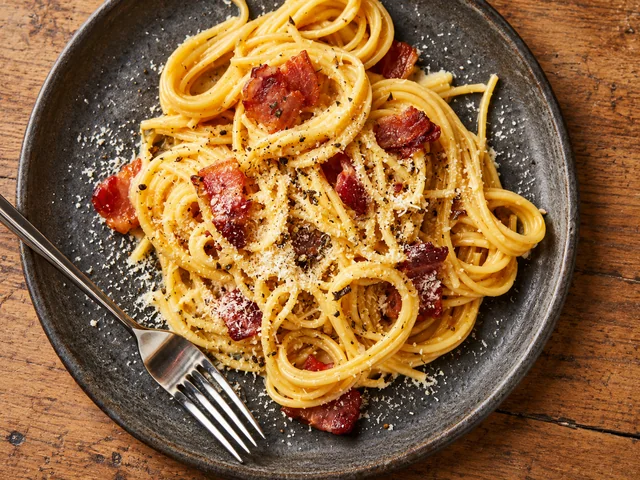
Spaghetti alla Carbonara

Five ingredients, no cream, one critical minute. The recipe comes first; everything that makes it work comes after.

2 servings · 25 min

Main · Bangkok, Thailand

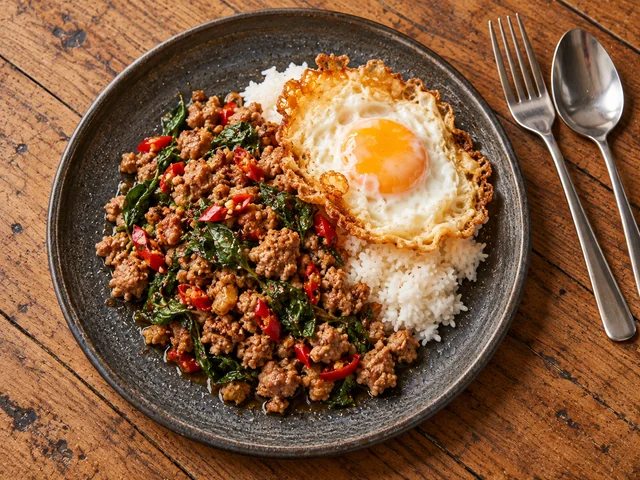
Pad Kaphrao

Holy basil, bird's eye chili, a smoking wok and a fried egg on top: Bangkok's lunch, taken apart.

2 servings · 20 min

Side · Northern Europe

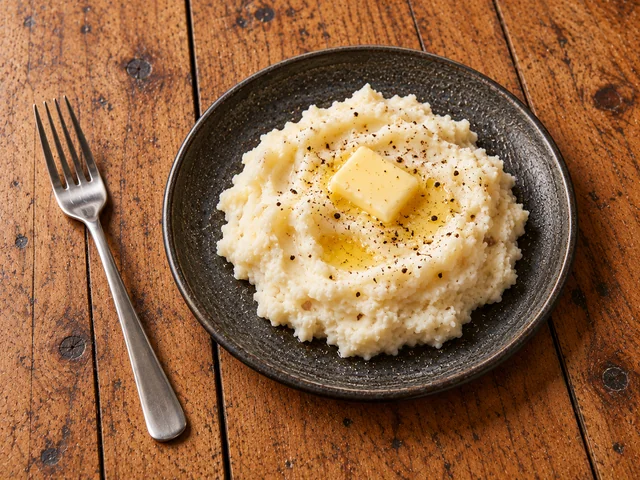
Mashed Potatoes

Starch is the whole story: which potato, how hot, and why the blender ruins it.

4 servings · 40 min

Starter · Southern Vietnam

Spring Rolls

A thin wrapper, a dry filling and oil at the right heat: the three rules of the crackle.

6 servings · 50 min

Filed Under