

Cibarious logo

PrimoRome, Lazio

Spaghetti alla Carbonara Recipe

Five ingredients, no cream, one critical minute. The recipe comes first; everything that makes it work comes after.

2
servings
25
minutes
5
ingredients

An egg emulsion, built off the heat

5 min read · 1,023 words

Plate I · Ingredients
  1. Guanciale
  2. Pecorino Romano
  3. Egg Yolks
  4. Black Pepper
  5. Spaghetti
Curated by CibariousPublished: October 8, 2026Illustrations byCibarious
2 portions

Ingredients

2 portions, 25 minutes, and the key moments that shape the result.

  • 100 gGuancialerind off, cut into 1 cm batons
  • 60 gPecorino Romanofinely grated, a pinch kept back
  • 3 yolksEgg Yolksseparated, at room temperature
  • 2 tspBlack Peppercoarsely cracked, never pre-ground
  • 200 gSpaghetticooked 2 minutes short of the package time
  • 14 gCoarse saltfor the pasta water, lightly

What runs when

Pot
Pan
Bowl

Method

  1. Put the water on

    0′–10′

    Bring 1 litre of water per portion to a rolling boil. Salt it lightly: about 7 g per litre.

    Why: Guanciale and pecorino are both salty. Fully salted water oversalts the sauce. Read more

  2. Cut the guanciale

    0′–4′

    Trim off the hard rind and cut the guanciale into batons about 1 cm thick and 3 cm long.

    Why: Batons render evenly and stay chewy in the middle. Thin slices burn; cubes stay raw inside. Read more

  3. Render, cold pan

    4′–13′

    Put the batons in a cold, wide pan with no oil and set it over medium-low heat. Cook until the fat is translucent and the edges are golden but the centres still give. Turn off the heat.

    Why: Starting cold lets the fat melt out before the surface browns. Hot pan first means burnt outside and rubbery fat inside. Read more

  4. Make the egg paste

    5′–8′

    Whisk the yolks with the pecorino (keep a pinch for the end) and most of the pepper into a thick, dense paste.

    Why: Cheese mixed into the yolk dilutes its proteins and raises the temperature at which they scramble. Read more

  5. Cook the pasta

    10′–19′

    Drop the spaghetti and cook it 2 minutes short of the package time. Before draining, scoop out a mug of the cooking water.

    Why: The pasta finishes in the pan, and the starchy water is what holds the sauce together. Read more

  6. Loosen the paste

    17′–18′

    Stir 2 tablespoons of hot pasta water and a spoonful of guanciale fat into the egg paste.

    Why: Warming the paste a little first means the pan's heat doesn't shock it. Read more

  7. Pasta into the fat

    19′–20′

    Lift the spaghetti into the guanciale pan with tongs and toss for 30 seconds over low heat to coat every strand. Then take the pan off the heat.

    Why: Fat goes on first so the egg grips the pasta instead of sliding off. Read more

  8. The critical minute

    20′–22′

    Off the heat, wait 30 seconds. Pour in the egg paste and toss hard, adding pasta water a splash at a time, until the sauce is glossy and flows like heavy cream.

    Why: Yolk thickens between about 62 and 70 °C. Above that it scrambles. The heat left in the pan and pasta is all you need. Read more

  9. Plate immediately

    22′–24′

    Twist the pasta into warm bowls. Finish with the crispest guanciale, the pecorino you kept back, and a final crack of pepper.

    Why: The sauce keeps thickening as it cools. Within two minutes it goes from silk to paste. Read more

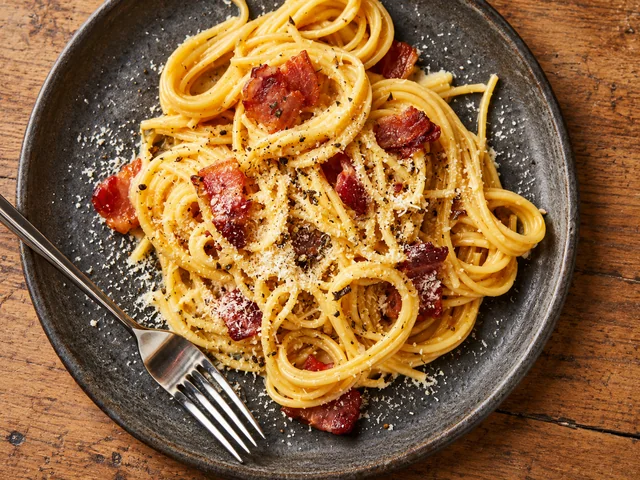
Spaghetti alla Carbonara, finished and plated
Plate II · The finished dish

Why It Works This Way

You have the recipe. Here's why it works, and what happens when you change it.

The Critical Minute

Carbonara is not a sauce you cook. It's one you set. Everything before this minute is preparation; this is the dish.

The window is eight degrees wide. Cheese, fat and starch make it wider.

Yolk proteins start to unfold and thicken at around 62 °C. Up to about 70 °C they build a silky, spoon-coating body. Past that point they bond to each other, squeeze out water, and turn into curds. You have roughly eight degrees between sauce and scrambled eggs.

Three things widen that window. Pecorino dilutes the proteins, so they need more heat to find each other. Guanciale fat coats them, slowing them down. And the starch in the pasta water gets between them, physically blocking the bonds that make curds. That's why the paste is cheese-heavy, why fat goes on the pasta first, and why you add water a splash at a time.

The heat source is the pasta itself, not the burner. Straight from the pot, drained spaghetti is close to 90 °C. A pan that's been off the heat for thirty seconds brings it down to where the yolks thicken without scrambling.

Right
Glossy, flows slowly when you tilt the bowl, coats each strand with no puddle.
Too thin
Watery and pooling. Put it back on the lowest heat for 10 seconds at a time, tossing constantly.
Too far
Grainy specks or curds. Toss hard with a splash of warm pasta water; you'll save the texture, not the gloss.

Rules You Can Break

We don't police carbonara. We just tell you what each change actually does.

  • CreamHides the technique

    A spoonful makes the sauce almost scramble-proof, because it adds water and fat between the proteins. It also mutes the pepper and the pork. It works, but it covers up the technique instead of teaching it.

  • GarlicChanges the dish

    A crushed clove in the rendering fat, pulled out before the pasta goes in, is a common Roman home habit. Leave it in and garlic becomes the main flavor.

  • Whole eggsHarmless

    One whole egg plus yolks gives a lighter, looser sauce. Whites set at a lower temperature, so give the pan a few more seconds off the heat.

  • ParmigianoHarmless

    Half and half is a classic Roman blend. All Parmigiano makes a sweeter, milder dish. Neither is a crime.

  • PancettaChanges the dish

    Meatier, leaner, less peppery. A good dish, just not quite this one. Smoked bacon moves it further still.

  • OnionDon't

    Adds sweetness and moisture, both of which fight the pork and dilute the emulsion. If you want onion, make Amatriciana.

A Young Classic

Carbonara tastes ancient but is surprisingly recent. It first shows up in print around the middle of the twentieth century, and some early published versions used pancetta and even Gruyère. The guanciale-pecorino-yolk version that Rome defends today came later.

Where it came from is still argued over. One story credits the carbonai, charcoal makers in the Apennines; another credits the bacon and powdered eggs of Allied rations in post-war Rome. Neither has been proven, which is part of the dish's charm. What isn't in doubt is the idea behind it: a few shelf-stable ingredients turned into a sauce using only technique.

What Each Ingredient Does

  1. GuancialeThe fat engineRenders the fat that becomes half of the sauce, and gives the crisp, peppery bites that punctuate it.
  2. Pecorino RomanoThe salt and the biteSeasons the dish, thickens the egg into a paste, and keeps the yolk proteins from tightening too early.
  3. Egg YolksThe emulsifierLecithin in the yolk binds fat and starchy water into one glossy sauce. The yolk proteins thicken it, as long as they stay below scrambling temperature.
  4. Black PepperThe heatGives the dish its warmth and aroma. Toasted briefly in the guanciale fat, it turns from sharp to deep.
  5. SpaghettiThe vehicleCarries the sauce. Its surface starch, plus the starch in the cooking water, is what keeps the emulsion from breaking.

Even gastronauts make mistakes sometimes! Always check mission-critical intel like allergens and substitutions. See our Terms of Use & Editorial Policy.

Now Send This Recipe Down the Line

Good cooks don't guess. They share, too!

Help another home chef make this dish work.

More Recipes to Love

all recipes
1 / 3

Main · Bangkok, Thailand

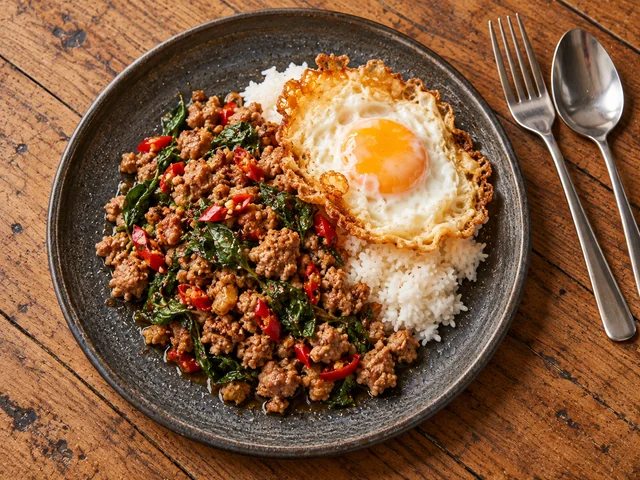
Pad Kaphrao

Holy basil, bird's eye chili, a smoking wok and a fried egg on top: Bangkok's lunch, taken apart.

2 servings · 20 min

Baking · United States

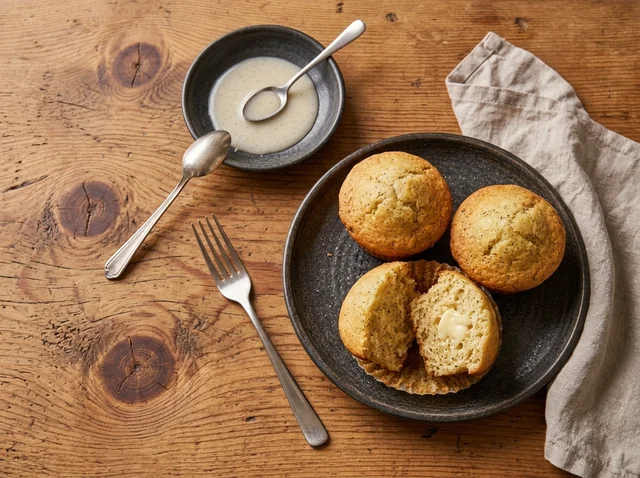
Vanilla Muffins

Two bowls, a lazy fold and the reason overmixing leaves tunnels in the crumb.

12 servings · 35 min

Side · Northern Europe

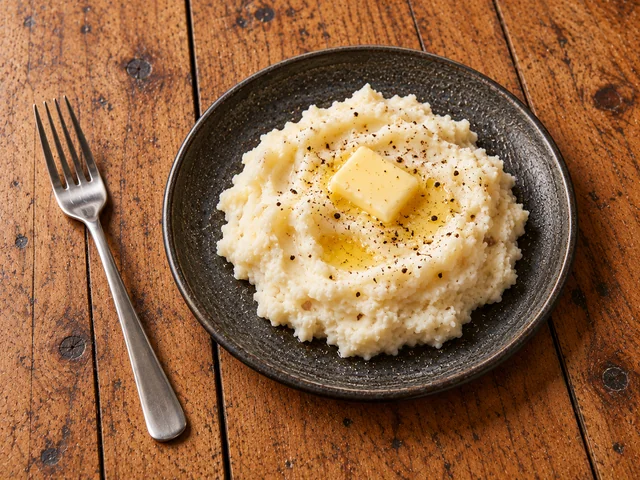
Mashed Potatoes

Starch is the whole story: which potato, how hot, and why the blender ruins it.

4 servings · 40 min

Starter · Southern Vietnam

Spring Rolls

A thin wrapper, a dry filling and oil at the right heat: the three rules of the crackle.

6 servings · 50 min

Filed Under