
8 min read · 1,583 words
The first time I saw someone in Riga try to make a Caprese salad with the wrong mozzarella, I felt a physical pang. It was a sympathetic spasm, right in the feeder’s heart. They’d found a decent-looking ball of fior di latte, but they’d sliced it thick, laid it next to pale, out-of-season tomatoes, and drizzled it with a viscous, sweet balsamic glaze. The cheese just sat there, weeping a sad, tasteless whey onto the plate, unable to lift the weight of those ingredients. It wasn’t their fault. The chaos of the dairy aisle had won. They saw “mozzarella” and thought “fresh,” but they missed the single most important decision point: not all fresh, white, milky orbs are built for the same battle.
This is the quiet tragedy of the fresh mozzarella family. We lump them together under one creamy, mild banner, then get frustrated when our insalata lacks punch or our pizza topping vanishes into a puddle. I’ve done it myself, in a Prague apartment, cursing a watery latte while trying to recreate a Neapolitan pizza night. The problem was never the cheese. It was my failure to understand the taxonomy of pull. These are not interchangeable commodities. They are siblings with distinct personalities, born from different milks, different making processes, and destined for different culinary fates. Choosing the right one isn’t pedantry. It’s the difference between a dish that sings and one that just slumps on the stage.
So let’s organize the chaos. We’re not just cataloging cheeses. We’re mapping a decision tree made of milk, moisture, and moment.
Mozzarella di Bufala Campana DOP
Let’s start with the king, the one that spoils you for all others. True Mozzarella di Bufala Campana, and yes, the DOP matters here like a passport stamp, is not just an ingredient. It’s an event. Made from the rich milk of water buffalo raised in specific regions of Italy, its flavor profile is a complex symphony where creaminess is just the opening note. Followed by a distinct, grassy tang, a whisper of barnyard (the good kind), and a lingering, almost sweet finish.
Its texture is its superpower and its curse. It is phenomenally tender, with a thin, yielding skin that gives way to a luscious, almost fluid interior. This high moisture and fat content is what creates that legendary “filante” pull. But this same delicacy makes it a prima donna in the kitchen. It’s terribly fragile, has a short shelf life, and weeps whey like it’s mourning its own separation from the siero madre (the mother whey).
When to choose it: When the cheese is the star. This is a cheese for minimalism. It needs a plate, maybe some bread, and absolutely nothing to hide behind. A true Caprese, with sun-ripened, acidic tomatoes and fresh basil, is its perfect stage. The tomato’s acid cuts the fat, the basil adds perfume, and the cheese provides the luxurious, tangy core. Tear it, don’t slice it, over a simple pasta like spaghetti con pomodoro fresco right at the end, letting the residual heat just wilt it. Cooking it extensively is a crime. You’ll murder its texture and boil away its nuanced flavor, paying a premium for a puddle of fat.
I learned this the hard way, trying to impress a date in Oslo with “authentic” pizza. I splurged on imported bufala, dotted it over the dough before baking. What emerged was a delicious pizza, sure, but with greasy, shrunken islands of rubber where my precious cheese had been. A costly lesson in misplaced loyalty. Bufala is for adoration, not application of high heat.
This is the quiet tragedy of the fresh mozzarella family. We lump them together under one creamy, mild banner, then get frustrated when our insalata lacks punch or our pizza topping vanishes into a puddle.
Fior di Latte
This is the people’s mozzarella. Fior di latte translates to “flower of milk,” and it’s made from pasteurized cow’s milk (or sometimes a mix). Don’t let the poetic name fool you into thinking it’s delicate. It’s the reliable friend. Its flavor is milder, cleaner, and more straightforwardly milky and lactic than bufala’s. It lacks the tang and complexity, but that’s not a flaw: it’s a design feature. Its texture is springier, firmer, and it holds its shape and moisture far better under stress.
This structural integrity is why fior di latte is the undisputed champion of the pizzeria. When you see those beautiful, leopard-spotted pizze napoletane with pools of milky cheese and blistered crusts, that’s fior di latte. It melts beautifully, stretching into those photogenic strings without releasing a flood of whey that would sog the delicate cornicione. It’s also the better choice for cooking in general: in baked pasta dishes like pasta al forno, layered in a vegetable terrine, or even breaded and fried as mozzarella in carrozza. It can take the heat.
When to choose it: Any time the cheese is a component, not the soloist. It’s for cooking, baking, and salads where other strong flavors are present. A Insalata di Riso packed with tuna, olives, and capers needs the mild, binding presence of fior di latte, not the dominating tang of bufala. It’s your default for pizza, lasagna, and any situation where structural survival is key. Think of it as the foundation, not the fresco.
Bocconcini, Ovolini, and Treccia
Now, the family expands. These are primarily differences of size and shape, which directly inform their use. They’re usually made from cow’s milk (fior di latte style), though you can find buffalo versions.
- Bocconcini (“little mouthfuls”): These small, bite-sized balls are perfect for skewers, for scattering in salads where you want a burst of cheese in every forkful, or for marinating. Their high surface-area-to-volume ratio makes them ideal for absorbing flavors from olive oil, herbs, and chili flakes.
- Ovolini (“little eggs”): Even smaller than bocconcini, these are often used as a garnish or in delicate salads. They’re charming but fussy.
- Treccia (“braid”): This is a braid of mozzarella rope. It’s not just pretty; the braiding creates a different textural experience: more surface skin, slightly denser. It’s fantastic for tearing and sharing at the table. The act of pulling apart a treccia feels communal, ritualistic.
My personal obsession is with ciliegine (“little cherries”). They’re the perfect size for what I call “countertop foraging.” I’ll leave a bowl of them in the fridge, and throughout the day, I’ll pop one or two as I pass by. It’s a small, creamy reset button. This, by the way, is a habit I picked up from my Roman flatmate, who treated mozzarella ciliegine like other people treat grapes. A revelation in casual cheese consumption.
A good fresh mozzarella should feel tender and spring back slightly, not be hard or slimy.
Burrata and Stracciatella
Here’s where we get into envious territory. These are not strictly mozzarella, but they are its direct, decadent descendants. You need to understand them to complete the map.
- Stracciatella: The heart of the burrata. It’s made from shreds of fresh mozzarella (stracciatella means “little shreds”) soaked in fresh cream. It’s loose, luxuriously rich, and spoonable. It’s the ultimate filling or sauce.
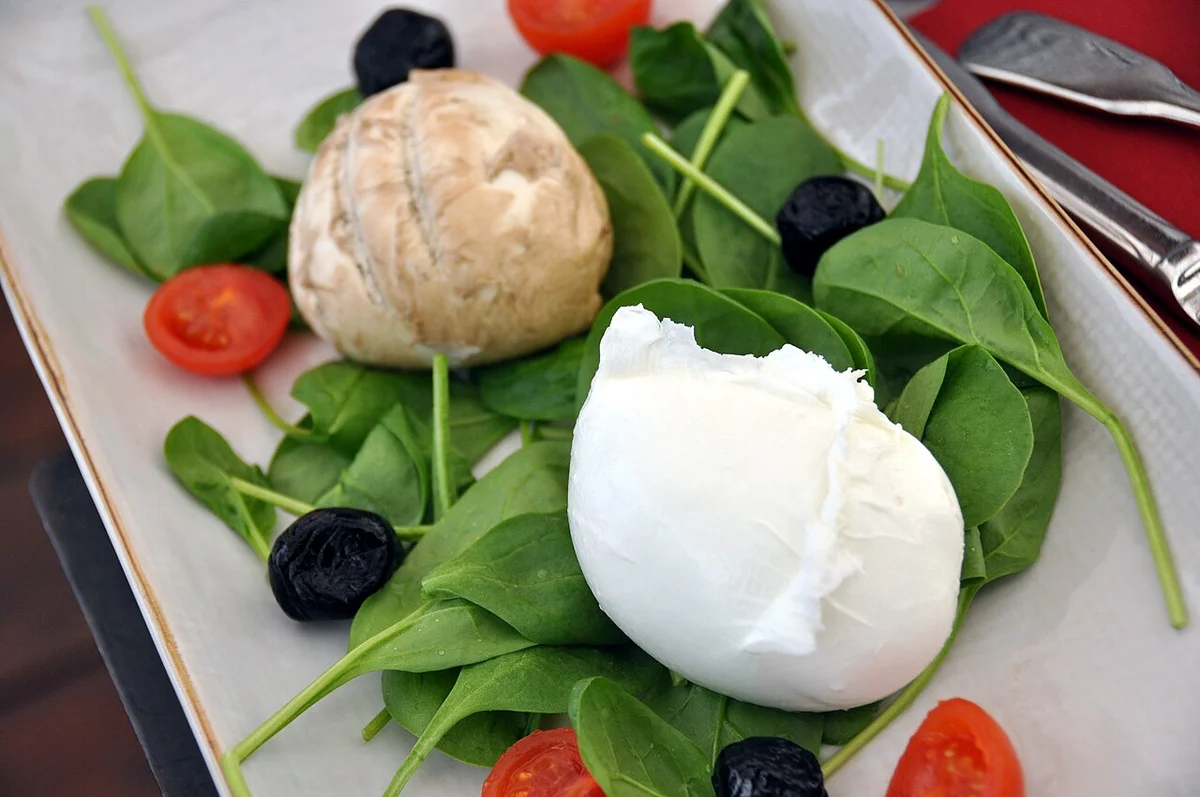
- Burrata: Think of burrata as a mozzarella pouch filled with stracciatella. You have a delicate outer shell of pulled mozzarella (pasta filata), giving structure, and an explosive, creamy interior. When you cut into a fresh, room-temperature burrata, it should be a moment of drama: the cream should spill out like a delicious secret.
When to choose them: For the grand gesture. Burrata is a centerpiece. Serve it whole on a plate, let people tear into it with grilled bread or ripe peaches and a drizzle of robust olive oil. Stracciatella is your secret weapon for plating: dollop it over roasted vegetables, use it as a bed for grilled shrimp, or fold it into a risotto at the very last second. Remember, these are even more perishable than fresh mozzarella. Buy them the day you plan to eat them. A burrata past its prime is a tragedy of wasted potential.
Moisture, Milk, and Moment
So how do you navigate this without a flowchart tattooed on your forearm? It boils down to three questions, asked in this order:
- What is the MOMENT? Is this cheese being eaten raw, barely warmed, or cooked through? Raw/room temperature: lean towards bufala or burrata. Cooked: fior di latte is your only serious contender.
- What is the MILK? Do you want the tangy, complex luxury of buffalo milk, or the clean, mild canvas of cow’s milk? Your budget and dish intensity answer this.
- What is the MOISTURE need? Do you want a cheese that weeps and melds (softer, smaller balls for salads) or one that holds its line (firmer, larger balls for slicing on pizza)?
Forget the word “mozzarella” at the store. Look for the specific name. And trust your fingers. A good fresh mozzarella should feel tender and spring back slightly, not be hard or slimy. It should be swimming in its whey, which should look milky and fresh, not yellow or sour.
The real takeaway isn’t just which ball to buy. It’s understanding that this family’s magic lies in its specificities. Using a fior di latte where a bufala is called for leaves a dish feeling shallow. Using a bufala where a fior di latte is needed is an act of culinary sabotage, a waste of a noble ingredient. It’s the difference between feeding someone and feeding them. One fills the stomach. The other, the one I’m obsessed with, feeds an understanding. It turns a chaotic dairy case into a map, and your next meal into a deliberate, delicious choice. Now go. Feel the weight, read the label, and choose your fighter.