
8 min read · 1,507 words
I was in a Riga supermarket, staring at a refrigerated shelf, watching a local woman pick up a tub of biezpiens, the fresh, white curd that’s a staple here. She looked at it, then at the Italian flag-colored packaging of a ricotta next to it, and put the biezpiens back. She was buying the “real” Italian thing for her recipe. And I had to physically stop myself from tapping her on the shoulder. Not to correct her, but to tell her she was right the first time. For what she was likely making, a creamy filling, a blintz, a simple sweet spread, the local product was probably the better choice. She’d been gaslit by a label and a flag into thinking the imported ingredient held some magical, unreplicable property. The tragedy wasn’t the choice, but the misunderstanding. She thought she was choosing between two cheeses. She wasn’t. One was a cheese. The other, the ricotta, is something else entirely. And that distinction isn’t pedantry. It’s the key to not ruining your dinner.
My Roman flatmate once tried to make a baked pasta for a party. He used a beautiful, expensive ricotta he’d found, mixed it with egg and spinach for the filling. It came out of the oven weeping a sad, cloudy pool of whey, the filling grainy and separated. He blamed the oven. I knew he’d blamed the wrong appliance. He’d committed the cardinal sin: treating ricotta like a melting cheese. You can’t be angry at a fish for not climbing a tree. You can’t be angry at ricotta for not behaving like mozzarella. It’s built differently, from the ground up.
The first, and most fundamental, error is one of taxonomy. We call ricotta a cheese because it’s white, sits in the dairy aisle, and Italians put it in things. But taxonomy is my obsession, plot points, datasets, ingredients. I need the messy to make sense. And here, the category is wrong. Cheese is made from the curds of milk, the solid proteins (casein) that coagulate with the help of rennet or acid. Ricotta is made from the whey: the liquid leftover from cheesemaking. You take that cloudy, protein-rich water, heat it again (ri-cotta means “re-cooked”), and the remaining, more delicate albumin proteins coagulate into those fragile, moist curds. It’s a byproduct. A glorious, delicious second act.
Think of it like this: making a classic Pecorino Romano is like boiling a chicken to get the meat. The meat is the cheese. The leftover broth is the whey. Now, you take that broth and simmer it until a delicate, soft chicken foam rises to the top. That foam is the ricotta. It’s a different substance, with a different protein structure. It’s whey protein, not casein. This is why, in Salerno, the old caseifici would have vats of ricotta draining next to the rounds of caciocavallo. They were two distinct products of the same milk, each with its own destiny. One for grating over pasta, aging for months. The other for eating that day, with a spoon and maybe some bitter honey.
You can’t be angry at a fish for not climbing a tree. You can’t be angry at ricotta for not behaving like mozzarella.
This whey-protein structure is everything. It explains why ricotta has a sweet, milky freshness, not the tangy, fatty depth of a young cheese. It explains its high moisture content and its delicate, almost crumbly texture that can turn sandy if abused. Most importantly, it explains its complete and utter refusal to melt. You can heat it, warm it, make it loose. But it will never achieve the gooey, stretchy, unified melt of a mozzarella or a fontina. Its proteins don’t do that. They tighten, squeeze out moisture, and call it a day.
So, when you see a recipe for lasagna that just says “ricotta,” a little alarm should go off. A good, traditional lasagna al forno from Bologna doesn’t use ricotta in the ragù besciamella layers; that’s a southern adaptation. And in that southern version, my grandmother’s version, you didn’t just dump ricotta in. You stabilized it. You mixed it with egg, which helps bind it and set it gently. You salted it and let it drain in a colander for an hour, sometimes weighting it with a plate, to get rid of excess whey before it could sabotage your bake. You treated it not as a cheese, but as what it was: a moist, delicate dairy product that needed a chaperone to go into the oven.
This leads to the second, more insidious mistake: assuming all ricotta is created equal. Walk into any grocery store from Oslo to Omaha and you’ll find two types: the grainy, dense block in sealed plastic, and the loose, creamy fresh stuff often sold in deli containers. The former is industrial, made from a blend of whey and often some whole milk or even milk powder, stabilized, and designed to have a shelf life longer than some relationships I’ve had. It’s consistent, and it’s fine for certain applications where texture is secondary. But it is the elevator music of ricotta.
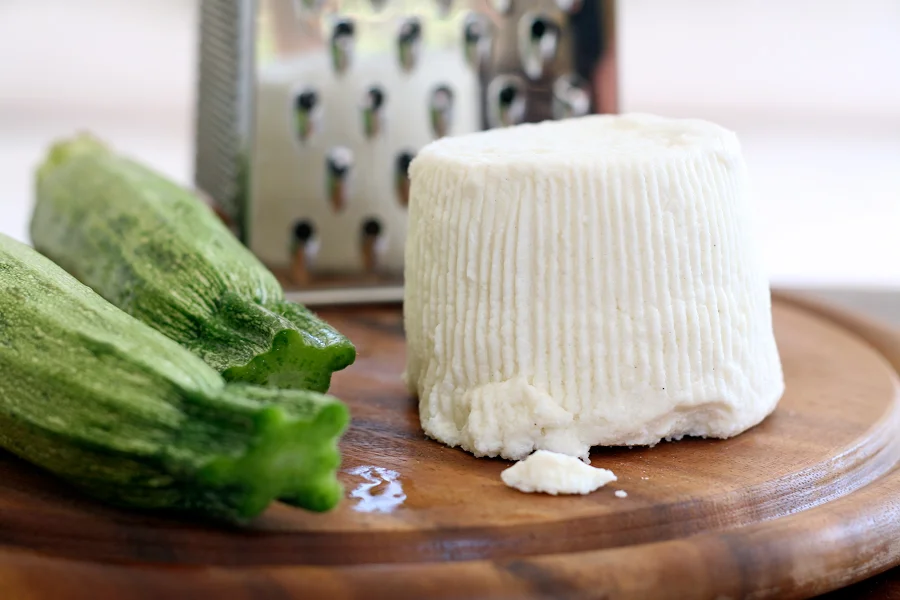
The good stuff, the ricotta fresca, is perishable, fragile, and tastes like sweet, happy milk. It should be loose. It should be moist. It should have a texture between whipped cream and fresh curd. In Riga, I’ve found this texture more reliably in the top-tier biezpiens or the Lithuanian varškė than in most imported “Italian” ricottas that have survived a shipping container. This is the European cosmopolitan lesson: the local fresh curd is often closer to the spirit of the ingredient than the international commodity. When I make ricotta al forno, a Roman Jewish classic where you bake sweetened ricotta with bits of chocolate or candied fruit, I seek out this freshness. The graininess of industrial ricotta would ruin the sublime, cloud-like texture. You’re not just buying an ingredient; you’re buying a moisture content, a protein structure, a level of fragility.
You’re in ricotta territory. Protect it. Drain it. Fold it. Love it for what it is, not for what some TV chef told you all white dairy products should be.
And fragility is the operative word. Which brings me to the third error: manhandling it. Because ricotta isn’t a cheese, you can’t treat it like one. Beating it vigorously with a whisk will make it grainy. Stirring it too much in a hot filling will make it grainy. Letting it sit in its own whey in the fridge and then dumping the whole wet mess into your dough will make it… you guessed it. Grainy. Sandy. Wrong.
The chaos organizer in me sees a simple system: ricotta’s enemy is mechanical agitation and uncontrolled water. So you manage the system. For fillings, whether for ravioli, cannoli, or savory frittata, you drain it first. Gently. You fold ingredients in, don’t beat them. You add binders (egg, breadcrumbs, a tablespoon of flour) not just for cohesion, but to give the delicate curds something to cling to. When I make a filling for pumpkin tortelli, I mix the roasted butternut squash pulp with the ricotta, Parmigiano-Reggiano, amaretti crumbs, and egg with a rubber spatula in broad, gentle strokes. It looks barely mixed. That’s the point. You’re preserving architecture.
This is where people, especially my fellow Italians, get gatekeepy and unhelpful. “You must use sheep’s milk ricotta for the true taste!” Sure, ricotta di pecora is a deeper, gamier, fantastic product. But it’s also harder to find and more expensive. The cow’s milk version (ricotta vaccina) is not “fake.” It’s different. And for many applications, like lightening a lemon zest-flecked pasta sauce, or spreading on toast with sea salt, its milder flavor is an advantage. The dogma ignores the ingredient’s function. Is it there as the star, or as a creamy, mild backdrop? Choose based on that, not on a flag.
The actionable takeaway isn’t a rule, it’s a lens. Before you open the container, ask: am I using this as a cheese, or as a whey product? If the answer is “cheese”, you want melt, stretch, a pronounced tang, you’ve picked the wrong soldier. Grab a scamorza, a caciotta, even a good feta if you want crumbly saltiness. If the answer is “whey product”, you want fresh moisture, a gentle sweetness, a soft texture that needs care, then you’re in ricotta territory. Now, protect it. Drain it. Fold it. Love it for what it is, not for what some TV chef told you all white dairy products should be.
Last winter, I made ricotta salata for the first time. It’s the exception that proves the rule: ricotta that’s salted, pressed, and aged until it’s firm and sliceable. It becomes a cheese, but through force and time. As I pressed the fresh curds, watching the whey drip out, I realized I was forcing it into a category it never asked to be in. It was fascinating. A week later, I grated it over a pasta with broccoli rabe and garlic. It was salty, crumbly, perfect. But I missed the freshness of the original, the one that tastes of the same day. That’s the ricotta I’ll always come back to. The one that isn’t a cheese. The one that needs you to know the difference.