
9 min read · 1,879 words
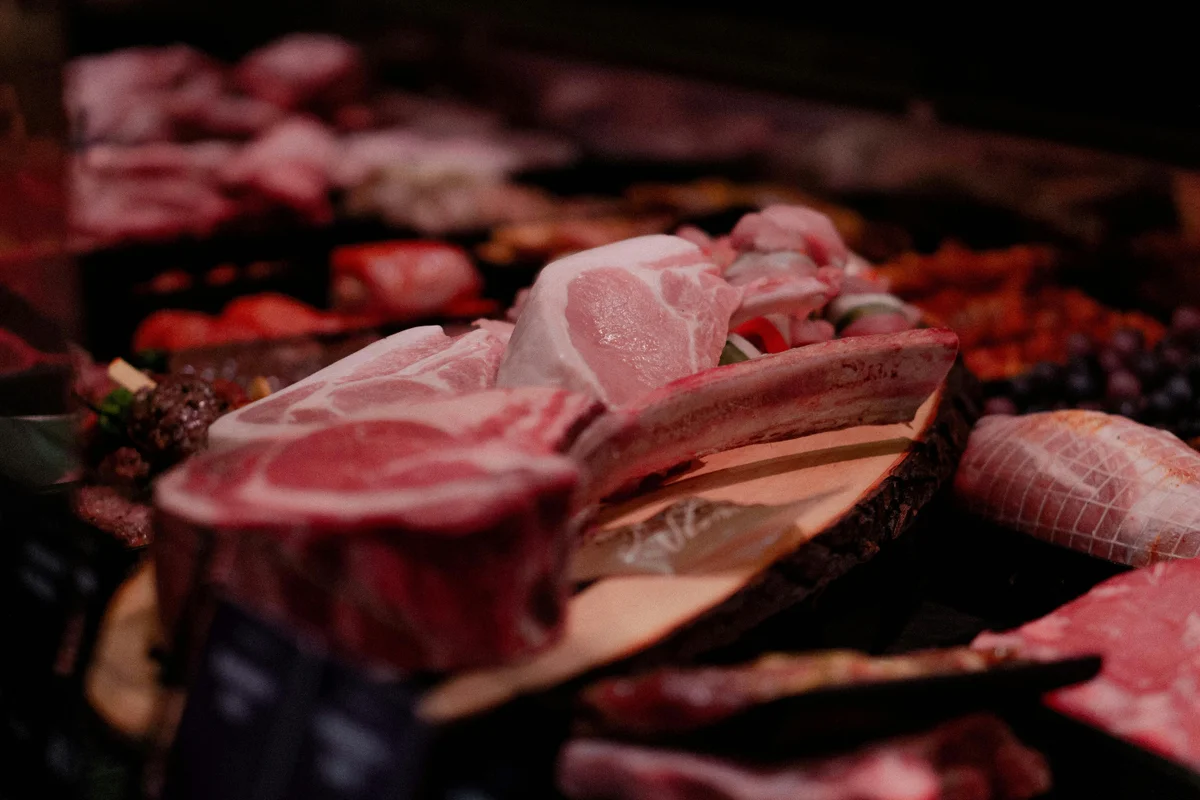
I was standing in a butcher shop here in Prague, the good one over in Žižkov where the guy actually knows what a brisket point is, and I heard a customer ask in broken English, “For roast, I salt now or later?” The butcher, a solid dude who’s learned to tolerate my endless questions about Czech pork fat, just shrugged and said, “Before. Always before.” And I had to bite my tongue. Because always is a word that gets you in trouble with meat. It’s like saying you always smoke at 225. What if your fire’s running hot? What if it’s a shoulder versus ribs? You adjust. Salting’s the same. It ain’t a rule, it’s a tool. And using a tool wrong means you’re working against yourself before you even light the fire.
See, back in Vienna, Georgia, not Austria, my uncle would pull a whole hog out of the brine on Friday morning, that meat already changed, already seasoned deep. But then he’d hit the skin with another heavy sprinkle of salt right before it went over the coals. I asked him once, “Unc, why twice?” He didn’t even look up from the fire. “First one’s for the meat. Second one’s for the bite.” It took me years of competition, of over-salting briskets and under-seasoning chops, to really understand what that meant. It’s about time, and what you want time to do. Out here, I see folks salting a steak right before it hits the pan, worried about moisture, and then they wonder why it tastes like salt on the meat, not in the meat. Or they’ll bury a roast in salt for three days and act shocked when it comes out tasting like a cure, not a cook. The timing ain’t just a suggestion. It’s the difference between seasoning and penetration, between a juicy bite and a salty crust.
The Myth: Salt Right Before Cooking to Keep the Juices In.
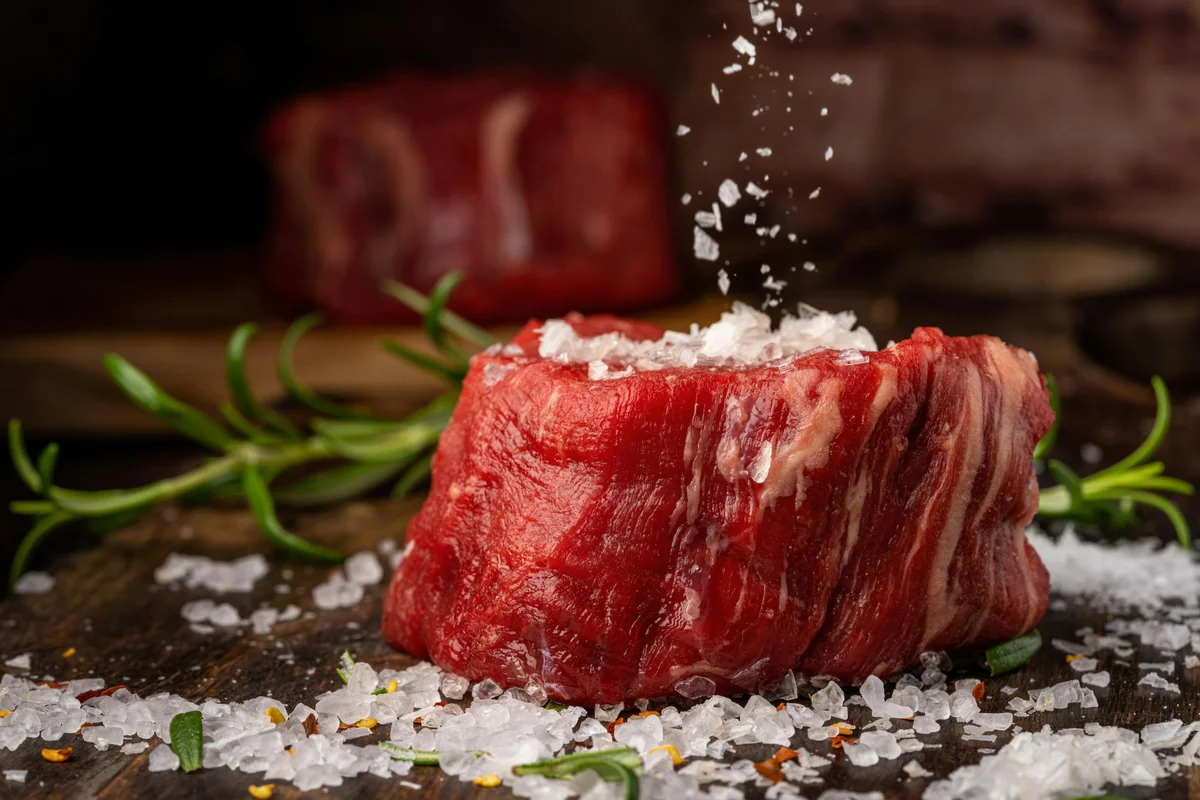
This is the one I hear most, and it’s backwards. The fear is that salt will pull out all your moisture, leave you with a dry, tough piece of work. So the logic is to wait until the last second, seal those juices in. Let me tell you what’s really happening. Salt is hygroscopic: it pulls water towards it. When you first sprinkle it on a raw steak or a chicken thigh, it does pull moisture to the surface. You’ll see it bead up. That’s the “weeping.” If you throw it on the grill right then, that surface moisture has to evaporate before you get a good sear, and worse, that salt hasn’t gone anywhere. It’s just sitting there in that puddle. You’re basically steaming the outside and seasoning only the very surface. The juice it pulled out? It takes the salt with it when it drips into your fire and flames up.
Now, if you give it time, and I’m talking 45 minutes for a thick steak, up to a day for a big roast, that pulled moisture dissolves the salt, creating a concentrated brine. And then, through diffusion and osmosis, that brine gets re-absorbed back into the meat, carrying the salt seasonings deep into the muscle fibers. It seasons from the inside out. The result? Meat that’s seasoned throughout, not just on the crust, and that actually retains more of its natural moisture during cooking because the salt has helped the proteins retain water. I do this with my pork shoulder every single time. The night before, I give it a heavy, even coat of salt (and my rub, but the salt’s the key). By morning, the surface is tacky, almost dry to the touch: that’s the brine fully absorbed. That shoulder cooks up juicier than one I salted right before it went on the smoker. Every time. It’s not magic, it’s cell biology.
First one’s for the meat. Second one’s for the bite.
The Myth: Dry Brining is Just for Pros and Takes Too Long.
I get it. We’re all busy. The idea of planning your seasoning 24 hours ahead feels like a restaurant move. But here’s the thing: even 40 minutes is a game-changer. It’s not all-or-nothing. Think of it in tiers. You got your quick-cooking cuts: chicken thighs, pork chops, steaks under an inch thick. For those, just get them out of the fridge, salt them generously, and let them sit on a rack while you prep everything else: your fire, your sides, your pan. That 30-60 minute window at room temp is enough for the salt to start its journey and for the meat to come up a bit in temp, which leads to more even cooking. This is my weeknight move. Those chicken thighs? Salt them as soon as you walk in the door. By the time you’ve changed clothes and got your skillet hot, they’re ready to go in and they’ll taste like you seasoned the bird itself, not just the skin.
Then you got your low-and-slow projects. This is where the real transformation happens. A full pork shoulder or a brisket flat benefits massively from an overnight dry brine in the fridge. The cold environment slows the process but deepens it. It also dries out the surface, which is critical for smoke adhesion and bark formation. A wet surface steams. A dry, tacky surface grabs smoke and forms a crust. My fridge in Prague has a shelf dedicated to this. It’s not complicated. Salt it, stick it on a rack over a sheet tray, and forget it until tomorrow. The “too long” argument falls apart when you realize the active work is 30 seconds. The rest is just the clock doing the work for you. It’s the easiest “pro move” there is.
The Myth: You Can Always Fix Undersalting at the Table.
This one’s a quiet tragedy. You slice into a beautiful piece of meat, maybe a roast vepřová plec (that’s pork shoulder to my folks back home) you spent hours on, and the first bite is… flat. It’s juicy, it’s tender, but it tastes bland. So you reach for the salt shaker. And now you’re eating salty meat, not seasoned meat. There’s a canyon of difference. Salt applied after cooking sits on the tongue. It hits your taste buds first and sharp. Salt that’s had time to migrate into the meat amplifies the flavor of the meat itself. It melds, it enhances, it becomes part of the food’s character. Sprinkling at the table is like adding a voiceover to a movie after it’s filmed. It’s commentary, not part of the performance.
This is where I see a lot of home cooks, and even some grill dads, go wrong. They’re scared of over-salting, so they under-salt during prep, thinking they can adjust later. You can’t. Not really. The structural work of seasoning happens before the heat ever touches it. This is why my granddaddy was a demon about tasting his braises and brines before they went in the smoker. “If it don’t taste right now, it won’t taste right later,” he’d say. He was talking about the liquid, but the principle is the same for the meat. The salt needs to be in the party from the beginning, not show up at the end when all the good conversation is over.
Salting ahead isn’t about patience for patience’s sake. It’s about giving a fundamental process the time it needs to complete.
The Myth: Kosher Salt, Table Salt, Sea Salt, It’s All the Same.
Okay, let’s talk mechanics. If the goal is consistent, even penetration, the physical shape of the salt crystal matters. Table salt is fine, dense, and often has anti-caking agents like iodine. It’s easy to overdo because a pinch has way more salt by volume than a pinch of kosher salt. It also doesn’t adhere as well to a wet surface; it can clump and create pockets of extreme saltiness. Kosher salt, like Diamond Crystal (my ride-or-die), is flaky, light, and dissolves easily. It’s easier to distribute evenly with your fingers, you can see where it’s landed, and its volume-to-weight ratio is more forgiving. When I say “a heavy coat,” I’m picturing Diamond Crystal in my hand. If you’re using fine sea salt or table salt, a “heavy coat” will make your meat inedible.
I learned this the hard way early in my competition days. I ran out of my usual salt and used a fine-grain sea salt for a brisket, applying it like I normally would. That brisket came out salty enough to preserve a sailor. The surface area was all wrong. Now, I keep a box of a local coarse salt from Slovenia in my kitchen for when I run out of my American stash, but I had to test it first: a few pinches on some chicken thighs to see how it dissolved, how it covered. You have to know your tools. This is also why I tell people to pick one salt as their main “cooking salt” and get to know it. Your hand will learn the weight and the spread. Consistency here is everything.
So When Is It Actually Too Late?
This is the heart of it. The “too late” moment isn’t one minute before cooking. It’s the moment you’ve missed the window for the type of cook you’re doing. For a quick-seared steak? Salting less than 40 minutes before is a missed opportunity for depth. For a big roast? If you haven’t salted it by the time you preheat your oven, you’ve functionally decided to only season the crust. But there’s another “too late” that’s more subtle: after a wet marinade. If you’ve soaked your meat in an acidic or liquid marinade, and then you try to dry-brine it, you’re fighting a losing battle. The surface is waterlogged. The salt will just wash off or dissolve into the surface liquid and not penetrate. In that case, you season your marinade, not your meat. Get your salt in that marinade base so it has time to work.
And look, sometimes life happens. You forgot. The guests are here. The fire’s perfect. If it’s too late to dry-brine, then your play is to salt right before cooking, accept you’ll have a more surface-level seasoning, and maybe finish with a flaky, high-quality salt after resting for a textural pop. It’s not ideal, but it’s honest. I’d rather you do that than try to “inject” seasoning by oversalting a sauce or a glaze to compensate. That puts the balance all out of whack.
The real takeaway isn’t a timer. It’s an intention. Salting ahead isn’t about patience for patience’s sake. It’s about giving a fundamental process the time it needs to complete. It’s the first, most respectful step in cooking the animal. You’re not just adding a taste, you’re changing the structure. Out here, my Czech butcher friends get this intuitively with their dry-cured sausages and hams: they live in a world of time and salt. It’s the same science, just a different timeline. So next time you’re staring down a pack of pork shoulder or even just some chicken thighs, salt them first. Put your coffee on, stoke your fire, let the clock do the quiet, chemical work that turns seasoning from a topping into the foundation. That’s where the flavor lives. Not on the surface, but in the story of the meat itself.