
8 min read · 1,605 words
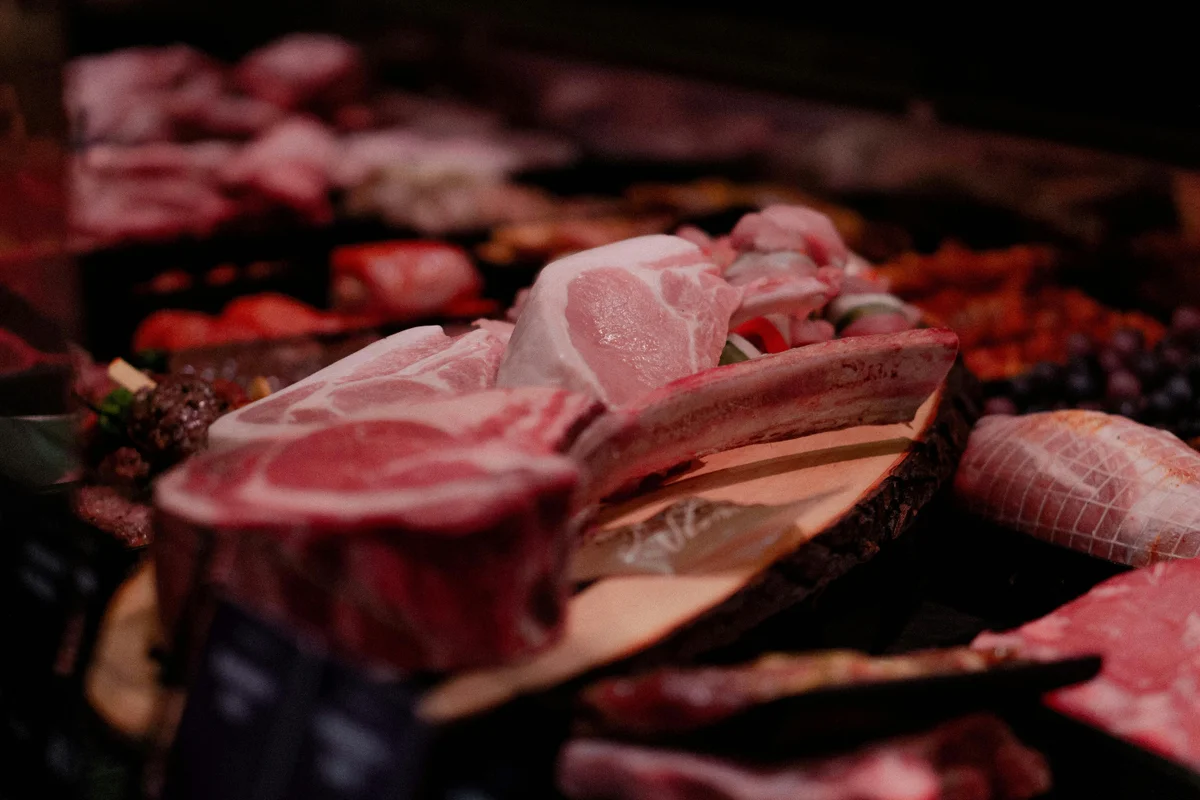
I’m standing in a cold room in a Prague butcher shop that smells like damp stone and clean fat, pointing at a massive slab of vepřová kýta: pork leg. My guy, Petr, he’s got the boning knife in his hand, ready to go. He looks at me, I look at the leg, and I shake my head. “Nah, man. Leave it in.” He gives me that look, the one I get a lot over here. It’s the “but this is how we’ve always done it” look mixed with a little “you crazy American.” See, here, for a lot of traditional preparations, they bone it out. Neat, tidy, easier to slice. But I’m thinking about 14 hours from now, that deep, resonant porkiness you only get when the heat has something to work against, something to conduct it and flavor it from the inside out. I’m not just being stubborn. I’m thinking about the final bite. That’s the moment you’re shopping for, right there in the cooler. You’re not buying meat; you’re buying a future.
It’s a simple choice at the counter: bone-in or boneless. And most of the time, folks treat it like a convenience tax. Boneless is “premium” because the work’s done for you. Bone-in is “rustic” or “old-school.” But that’s surface-level thinking, and it’ll cost you in flavor every time. The bone ain’t just a handle or a nuisance. It’s an active participant. It’s architecture. It’s seasoning. Choosing wrong isn’t about making a slightly less tasty dinner. It’s about fundamentally misunderstanding what you’re trying to build in the first place. So let’s talk about when that piece of calcium actually earns its keep.
My granddaddy never once told me the bone added flavor. He’d have smacked me upside the head for saying something so vague. What he said was, “The bone pulls the heat in like a magnet, and the meat holds onto its juice for dear life.” As a kid, I thought that was just him being poetic. Now I know he was talking about thermal mass and insulation. Think of the bone as a heat sink. In a low-and-slow environment, your smoker, your oven, your braising pot, that dense bone heats up slower than the surrounding muscle. It creates a temperature gradient, a gentle pull of energy from the outer meat towards the center. This isn’t some wild theory. It’s basic thermodynamics. That slower, more even pull helps prevent the muscle fibers next to it from seizing up and squeezing out all their moisture in a panic. The result? Meat that’s juicier adjacent to the bone. That’s why the best bite of a chicken thigh or a pork chop is always that last one, where you have to work a little.
The bone ain’t just a handle or a nuisance. It’s an active participant. It’s architecture. It’s seasoning.
But here’s where people get it twisted. This effect is meaningful in long, slow cooks. It’s the star of the show in a beef short rib or a pork shoulder destined for pulled pork. You put a boneless shoulder in my smoker, I’ll cook it, and it’ll be fine. Good, even. But it’ll lack that profound, deep-seated succulence right in the heart of the roast. The bone-in version has a creamier texture in the interior, a silkiness that the boneless one just can’t replicate because its heat environment was more uniform, more abrupt. The bone creates a microclimate. Now, for a quick-cook item? A strip steak you’re gonna give two minutes a side in a cast iron? The bone’s thermal mass effect is negligible. It’s mostly there for looks and, honestly, for the gnawing pleasure afterwards. So your first decision point is time. Low and slow? The bone’s your silent partner. Hot and fast? It’s decoration.
This leads me to my second point, which is about structure. The bone is the frame of the house. Remove it, and everything wants to slump. This is the biggest practical mistake I see in my restaurant and when I’m consulting. A bone-in pork loin or a rack of lamb holds its shape. It presents. You can tie a boneless one back into a semblance of its former self, but you’re fighting physics. Without that internal scaffold, the muscle contracts unevenly when it cooks. It curls, it tightens, it becomes a dense little football. That’s why a boneless chicken breast pounded thin is a great vehicle for a quick sauté, but a whole boneless turkey breast roasted for hours can be a dry, disappointing mess. It has nothing to hold its form against the relentless pull of heat.
I learned this the hard way, early in my Prague days. Jeff, my partner, wanted a “clean,” easy-to-slice special: a boneless veal shank. I thought, sure, why not, osso buco style but without the fuss of the bone. It was a disaster. Without the marrow bone in the center to distribute heat and provide structural integrity, the whole thing collapsed in on itself. The exterior was overdone, the interior was weirdly dense, and we lost all that unctuous, marrow-basted goodness that makes the dish. We served it once. Never again. The bone wasn’t just an ingredient; it was the load-bearing wall. You take it out, you better have a damn good plan for supporting the whole operation.
Now, let’s talk flavor, because this is where the “bone adds flavor” folks are almost right, but for the wrong reasons. The bone itself isn’t a flavor stick. But the connective tissue, the ligaments, the collagen-rich stuff that literally binds the meat to the bone, that’s the gold. When you cook low and slow, that connective tissue breaks down into gelatin. That gelatin bastes the meat from the inside, creating that mouth-coating richness, that unctuous quality in a perfect beef rib or pulled pork. When you debone a cut before cooking, you lose a massive surface area of that connective magic. You’re leaving the best part on the butcher’s block.
This is my constant conversation with European butchers. They are masters of their craft, but the tradition here often leans towards boning for specific, elegant preparations. When I ask for a bone-in pork shoulder for barbecue, I sometimes have to explain the why. I tell them it’s not about being primitive. It’s about chemistry. The conversion of collagen to gelatin at 160°F and above is what we’re engineering for. The bone gives us more of that raw material to convert. We end up in these great talks about marbling versus connective tissue, about how their grading system focuses on one while my tradition leverages the other. Those conversations are my favorite thing about being here. It’s not me teaching them. It’s us figuring out the translation between two deep meat cultures.
You weren’t just cooking meat. You were conducting an orchestra, and the bone was keeping the rhythm.
But Jordan, you might be thinking, what about waste? Respecting the animal? Isn’t boneless more efficient? Here’s my take, straight from my uncle: using every cut the right way is the respect. And sometimes, the right way requires the bone to be there. Grinding a bone-in chicken thigh for sausage is a waste of time and a good thigh. But slowly braising that same thigh, bone-in, skin-on, until the collagen melts and the bone can be pulled clean out? That’s honoring it. The bone has done its job, it’s provided structure and contributed to the flavor exchange, and then you remove it. You don’t start with it missing. You ever notice how a stew made with bone-in cuts, where the meat falls off the bone in the pot, has a richer body than one made with pre-diced boneless meat? That’s the gelatin. That’s the bone’s final gift to the dish. It’s the difference between broth and stock. One is an ingredient, the other is a foundation.
So, when do you go boneless? When the technique demands speed and direct contact. When you’re making cured meats like pancetta or lonzo, you bone out the belly or the loin because the curing process is about penetrating the meat evenly, and a bone gets in the way. When you’re butterflying a leg of lamb for a grill, you need it boneless to lay it flat so it cooks evenly over high heat. When you’re making a breakfast sausage, you want clean, quick cooking. The bone’s purpose has been served by the animal’s life. It’s not needed for this application. That’s the key: it’s about application, not absolute superiority.
My spice cabinet’s got sixteen chile powders because each one has a specific job. Smoked paprika for depth, cayenne for punch, ancho for fruitiness. I don’t just throw them all in because “spices are good.” The bone is the same. It’s a tool. You use it when the job calls for thermal mass, structural support, and that slow release of connective-tissue goodness. You leave it out when you need speed, uniformity, or you’re doing a preparation where it’s literally a physical obstacle.
Next time you’re at the counter, eyeing that pork shoulder or those chicken thighs, don’t just ask for the one that’s easier to deal with. Pause. Think about the future. Are you building a low-and-slow masterpiece where patience and chemistry do the work? Then you want that internal architecture. You want that heat sink. You want that hidden reservoir of richness. Let the bone do its job. Your patience isn’t just about waiting. It’s about creating the right physical environment for a transformation. And when you finally pull that pork and taste the difference, the deeper porkiness, the silkier texture right from the center, you’ll know. You weren’t just cooking meat. You were conducting an orchestra, and the bone was keeping the rhythm.