
7 min read · 1,273 words
It’s a universal kitchen shame, isn’t it? You buy the vibrant, perky bundle with the best intentions, this time you’ll make that green chutney, this time you’ll finish the curry with a confetti of green, and four days later you’re guiltily peeling it from the crisper drawer, its stems gone slimy, its leaves a sad, dark surrender. You chuck it, muttering about waste, and reach for the dusty jar of dried stuff on the shelf, feeling like you’ve failed some fundamental test of culinary virtue. We’ve been sold a binary, you see. Fresh Good. Dried Bad. And it’s a load of rubbish, born more from the glossy pages of food magazines than the reality of how flavour actually works. The real question isn’t which one to buy, but what you’re asking it to do. And more often than not, that sad jar in your cupboard is being wildly underestimated.
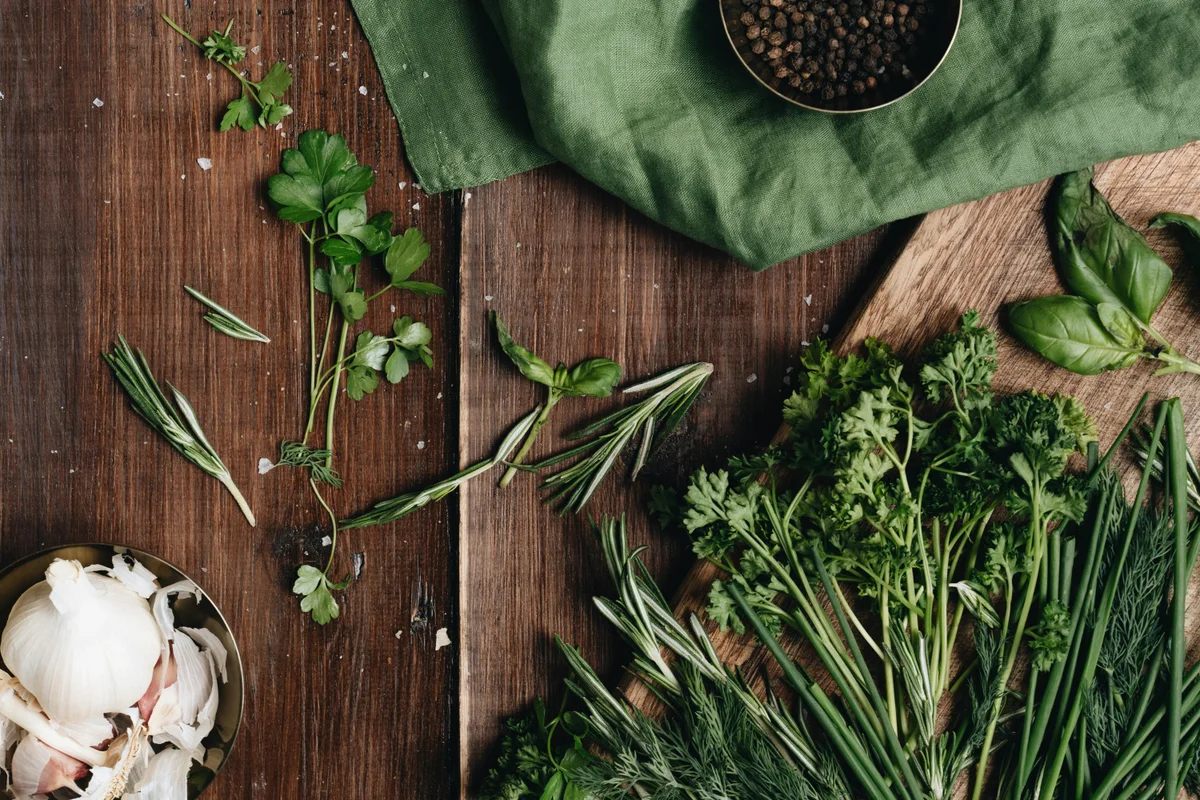
Let’s start with the most pervasive myth: that “fresh” is a permanent state of being for a herb. It’s not. “Fresh” is a fleeting moment in a plant’s life, a narrow window between being cut and beginning its slow, inevitable decline. That vibrant bundle from the market? It’s already dying. Our job is just to slow the process down. I learned this the hard way, not in some romantic farm visit, but in the sweaty, fluorescent-lit bowels of a restaurant kitchen at 7am. My job for weeks was “the herbs.” Parsley, chervil, tarragon, chives. They’d arrive in giant, wilting boxes, and my task was to perform CPR. Trim the stems, stand them in deep containers of ice water like floral arrangements for a very specific funeral, drape the whole lot with damp cloths, and stash them in the walk-in. It wasn’t about making them taste better; it was about arresting time, about preserving that specific cellular turgor and volatile oil content for the 12-hour service ahead. The “fresh” on your plate at 9pm was a carefully managed artifact from 7am. At home, you’re not running a service. Your basil doesn’t need to perform on demand for fourteen hours. So this obsession with peak, market-stall freshness for Tuesday’s spag bol is, frankly, exhausting. Sometimes, “fresh enough” is perfectly fine.
“Fresh” is a fleeting moment in a plant’s life, a narrow window between being cut and beginning its slow, inevitable decline.
This leads us directly to the dried herb, the perennial underdog. The disdain for it usually comes from people who’ve only ever encountered the pre-ground, neon-green dust that’s been sitting in a warehouse since the Thatcher era. That stuff is tragic. It tastes of hay and regret. But proper dried herbs, whole leaves, carefully dehydrated, are a completely different ingredient. They are not a substitute for fresh; they are a transformation. The drying process concentrates certain compounds and drives off the water that carries the bright, grassy, “green” top notes. What’s left are the deeper, warmer, more resonant bass notes of the plant. This is why rubbing dried oregano between your palms releases a sun-baked, almost peppery aroma nothing like its fresh counterpart. They are cousins, not twins. Using one in place of the other without adjusting your expectations is like swapping a crisp, acidic apple for a baked one and being surprised the texture is different.
The culinary reasoning here is about application, not absolutism. Think about it structurally. Are you using the herb as a finishing element, where its texture and volatile oils are the main event? Then yes, for God’s sake, use fresh. A pile of roughly torn basil stirred through a finished tomato sauce, or a shower of chives over scrambled eggs, is non-negotiable. The herb is providing a final, bright lift. But is it going into a long-simmering braise, a stew, a marinade, or the dry rub for a roast? This is where dried herbs not only suffice but can be superior. That stew is going to bubble away for three hours. Any fresh herb added at the start would have its delicate flavours cooked into oblivion within twenty minutes, leaving behind a ghost of chlorophyll and sad, slimy strands. Dried rosemary or thyme, however, will slowly rehydrate in the liquid, patiently releasing their more robust, woody flavours throughout the entire cooking process. They are built for the long game. I keep a mirepoix of dried herbs in a jar by the stove: equal parts dried thyme, rosemary, and oregano, crushed slightly. It’s my “base camp” blend for any long-cooked dish. It’s not cheating. It’s using the right tool for the job.
Now, let’s talk about the science-y bit, because it’s where people get scared and start making pronouncements about “purity.” The flavour in herbs comes from volatile organic compounds and essential oils. Heat, light, air, and time are their enemies. Fresh herbs are bags of water holding these delicate compounds. When you chop them, you rupture cells, releasing enzymes that can quickly turn flavours stale and dark: that’s why pre-chopped parsley in a plastic tub tastes so foul. Drying is a preservation method that stabilises the plant, but it changes the flavour profile because the most volatile top notes evaporate with the water. This isn’t a degradation. It’s an evolution. It’s the difference between a sharp, young goat’s cheese and a nutty, aged Comté. One isn’t better; they’re for different moments. Understanding this stops you from wasting a £3 packet of tarragon in a bearnaise that would have been happier with a teaspoon of the dried, steeped in the vinegar reduction.
Sometimes, the freshest thing you can do is stop worrying about what “fresh” even means, and just get on with it.
My own breaking point on the fresh-or-dried dogma came with bay leaves. For years, I dutifully bought those expensive, floppy fresh bay leaves in little plastic clamshells, believing them to be infinitely superior to the dried leathery ones in my spice rack. Then I did a blind taste test in a white wine poaching liquid for some pears. The fresh leaf gave a subtle, almost floral note. The dried leaf gave a deeper, more complex, vaguely medicinal warmth that worked better with the spice and wine. The fresh one was lovely, but the dried one had more to say. It was a revelation born of sheer curiosity (and a refusal to believe the more expensive option is always the right one). It taught me that “fresh” doesn’t automatically mean “more flavourful”; it means “different flavour.”
So, what’s the actionable takeaway? It’s about building a smart, non-dogmatic arsenal. Buy fresh herbs with a plan, and treat them like the perishable flowers they are. Trim the stems, pop them in a glass of water (like a bouquet), loosely bag them, and refrigerate. For woody herbs like rosemary, thyme, and oregano, don’t be afraid to buy a potted plant. It’s cheaper in the long run and you can snip what you need. For your dried collection, buy whole leaves where possible (dried marjoram leaves, not powder), store them in a dark cupboard away from the stove, and give them a gentle crush or rub between your fingers before using to wake up the oils. And for heaven’s sake, throw out anything that smells of nothing but dust. It’s dead twice over.
At the end of the day, it’s about removing the guilt and the guesswork. That jar of dried thyme isn’t a failure. It’s a strategic reserve. And that slightly past-its-prime bunch of coriander? If the leaves are just wilted, not slimy, blitz them with oil, garlic, and a handful of those frozen peas I’m always banging on about, and you’ve got a vibrant pesto for pasta tonight. No waste, no drama, just dinner. Because sometimes, the freshest thing you can do is stop worrying about what “fresh” even means, and just get on with it.