
8 min read · 1,543 words
I was in the middle of a perfectly good argument with a satsuma at my local greengrocer, it was claiming to be a mandarin, the audacity, when I overheard the couple next to me. They were staring, slightly panicked, at a pile of what looked like knobbly, pale green truncheons. “Is it… a weird cucumber?” one whispered. The other shrugged, picked up a packet of baby corn instead, and said, “Let’s just get more bok choy. We know what to do with that.”
My heart did a little sink. Not at them: absolutely no judgement for sticking with the familiar on a weeknight. We’ve all been there. My sinking feeling was for all those brilliant, textural, flavour-packed vegetables they were walking past, destined to be forever known as “the weird stuff” next to the reliable, ever-present brassica. Bok choy is a delight, a gateway green. But treating it as the sole representative of an entire continent’s veg patch is like thinking a Cox’s Pippin is the only apple worth eating. It’s missing the point, and more crucially, you’re missing out.
The thing is, navigating an Asian greengrocer or a well-stocked supermarket aisle doesn’t require a culinary PhD. It requires a shift in thinking. You don’t need to memorise fifty individual recipes. You need a way to look at a gourd or a bunch of spiky leaves and think, “Right, I see what you are. I know where you’ll fit.” It’s about recognising character and potential, not just a name. So, let’s move beyond the safety of bok choy. I’ll show you how to read the market, not just the label.
Learning to Cook by Feel, Not Just by Name
Forget memorising “stir-fry this, soup that” for a second. The single most useful thing you can do when faced with an unfamiliar vegetable is to assess its texture. This is where my kitchen training actually becomes useful, not just for show. In a professional setting, you learn to treat ingredients based on their physical properties, their density, water content, fibre structure, because that’s what determines how they behave under heat. We can steal that.
Take that knobbly truncheon the couple were eyeing. That’s bitter melon (karela or goya). Run a fingernail down its deeply corrugated skin. It’s firm, waxy, dense. That tells you instantly it’s not a quick-cook item. It’s built for a braise, a longer stew, something that will soften its formidable structure and mellow its famously… challenging flavour. Contrast it with a bunch of water spinach (ong choy or kangkong). The stems are hollow, the leaves are thin and tender. You look at it and think “spinach,” and you’d be right: it wilts in a hot pan in minutes. It’s a last-minute toss-in.
This texture-first approach creates your first, most useful mental cluster: The Long-Cookers vs. The Flash-in-the-Pans.
It requires a shift in thinking. You don’t need to memorise fifty individual recipes.
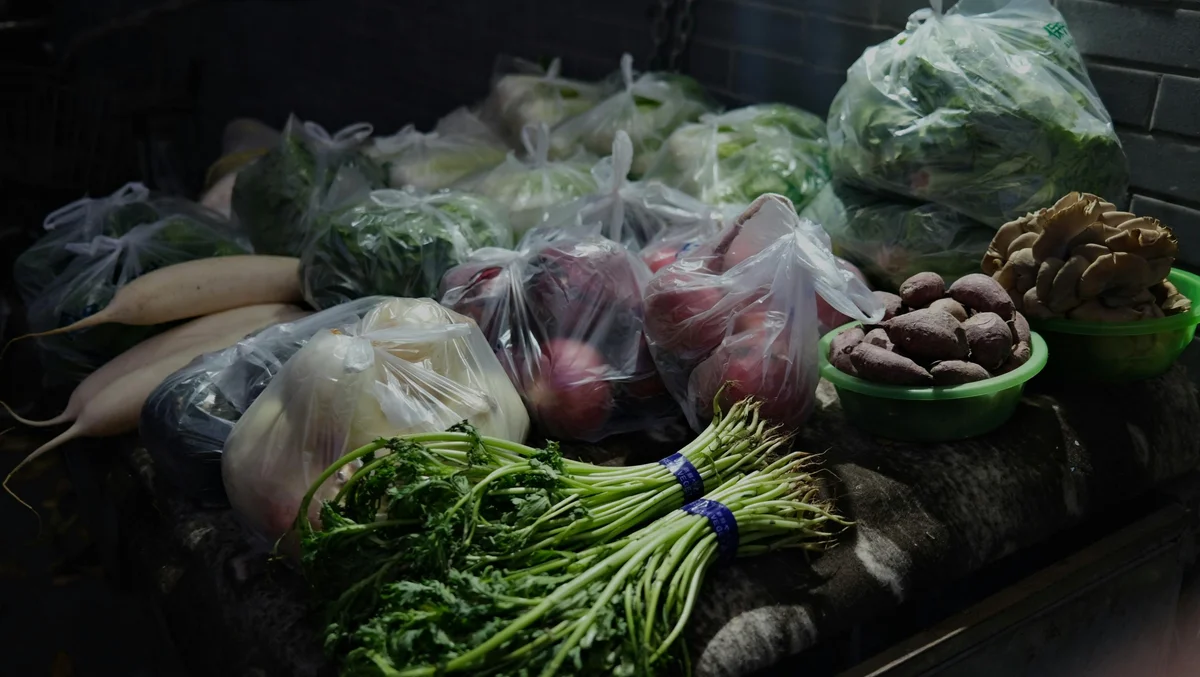
The Long-Cookers are your sturdy friends. Daikon radish is a prime example. That massive white root isn’t just for pickling. Cut into chunks, it has a radish punch when raw, but simmer it in a broth or a stew and it transforms: becoming sweet, tender, and almost translucent, soaking up flavour like a dream. Kabocha squash, with its dense, dry, sweet orange flesh, falls squarely here. Roast it, stew it, give it time. Lotus root, with its starchy, potato-like quality and those beautiful lace-like holes, needs time to soften and lose its raw crunch. These are your building blocks, the ingredients that form the foundation of a dish, requiring patience and gentle heat.
The Flash-in-the-Pans are your finishers. Garlic chives (gau choy), with their flat, dark green leaves, will turn to slime if overcooked. A quick toss in a screaming hot wok at the very end is all they need. Shiso leaves (perilla), with their unique, cumin-citrus-basil fragrance, are rarely cooked at all: they’re a finishing herb, a garnish, a wrap. Enoki mushrooms, with their delicate, thread-like stems, need mere seconds in hot liquid. Treat these like you would a fresh herb or a tender leaf spinach; their job is to provide a bright, fresh counterpoint, not structural integrity.
Once you start sorting by texture, the “what do I do with it?” anxiety starts to fade. You’re not cooking an unfamiliar name; you’re managing a physical ingredient. It’s the difference between following a map and understanding how to use a compass.
Building Your Base Notes
Now, let’s talk taste. And I don’t just mean “this is spicy.” I mean understanding which vegetables are background singers and which are the lead vocalists. This is where you start building layers, and it’s where a lot of home cooking gets stuck in a soy-sauce-and-ginger rut. Delicious rut, mind you, but there’s more to the orchestra.
Some veg are there primarily to provide depth, umami, and a savoury foundation. They’re your flavour architects. The king here is shiitake mushroom, especially the dried ones (dōnggū). Their intense, almost meaty savouriness is the backbone of countless vegetarian broths and braises. They’re not just a mushroom; they’re a stock cube that grows on a log. Winter melon (dong qua), while mild on its own, has a magical ability to absorb and carry the flavours of whatever it’s cooked with, making it a brilliant, subtle vehicle in soups. Seaweed, like wakame or kombu, is the ultimate umami bomb, infusing broths with a deep, oceanic salinity that has nothing to do with being “fishy.”
Then you have your accent vegetables. These have pronounced, distinctive flavours that define a dish. Chinese celery (kinchay) is nothing like its watery Western cousin. It’s all thin, intense stalks with a powerful, almost peppery celery punch. You use a handful, finely chopped, to make a stir-fry or filling sing. Thai basil (horapa) with its anise-licorice kick is unmistakable; it is the flavour of certain curries and stir-fries. You don’t hide it, you feature it. And of course, there’s bitter melon again: you don’t use it for subtlety. You use it because you want that bracing, cleansing bitterness, often paired with rich, fatty pork or black bean sauce to create balance.
The goal isn’t authenticity for its own sake: that’s a different kind of pretension. The goal is confidence.
The mistake is treating them all the same. Chucking a handful of potent Thai basil into a broth at the start of an hour-long simmer is a waste: its volatile oils will vanish. Blending subtle winter melon with a powerhouse like bitter melon means one will simply vanish. You have to stage their entrance. Architects first, to build the house. Accents last, to paint the front door a brilliant, memorable colour.
The Tuesday Night Test
All this theory is lovely, but it’s useless if it doesn’t survive contact with a Wednesday evening when you’re tired and just want dinner. This is the core of my entire philosophy: your Tuesday night soup just needs to exist. So how does this actually work on the ground?
Let’s say you’re making a simple noodle soup. You’ve got your broth simmering. You walk into the shop and see daikon (long-cooker, flavour absorber), bok choy (quick-cooker, we know it), and a bunch of yu choy (yóu cài), with its tender stems and yellow flowers. Right.
You dice the daikon, chuck it in the broth now. Let it simmer for 20 minutes until it’s tender and sweet. Five minutes before serving, you add the bok choy stems (a bit sturdier), then the leaves and the yu choy a minute or two later. You’ve just sequenced your vegetables by texture, without a recipe. You’ve used the daikon to add body to the soup and the yu choy to add a fresh, slightly mustardy green note at the end. You’ve treated them according to their character.
Or, you’re roasting a chicken. You’ve got kabocha squash (long-cooker, sweet). Cube it, toss it in oil and salt, and roast it around the bird. It’ll caramelise beautifully. In the last 10 minutes, you might toss in some halved shishito peppers (quick-cooker, accent) to blister. Dinner is done, with layered textures and flavours, and you didn’t break a sweat.
The goal isn’t authenticity for its own sake: that’s a different kind of pretension. The goal is confidence. It’s looking at a bundle of morning glory and thinking, “Hollow stems, tender leaves, flash in the pan,” rather than, “I need to Google a specific recipe.” It’s seeing taro root and recognising a starchy, dense tuber that will behave a bit like a potato but taste earthier, knowing it needs time and can be glorious mashed or in a stew.
So next time you’re at the market, do me a favour. Walk past the bok choy. Not because it’s not good, but because you’re ready for more. Pick up that knobbly bitter melon if you’re feeling brave, or a deep purple Japanese sweet potato if you’re not. Grab a bunch of pea shoots (dòu miáo) for a 30-second wilt. Read them by their texture, plan their role in your dish, and give them a stage entrance that suits their personality. You’ll find your weeknight cooking gets more interesting, one unfamiliar vegetable at a time. And you can still keep a packet of baby corn in the trolley. We all have our comforts. Mine’s a bag of crisps in bed, and I’m not giving that up for anyone.