
8 min read · 1,474 words
I was halfway through prepping a potato salad for a frankly too-large summer gathering, my fingers slick with a vinaigrette that smelled of tarragon and regret, when I realised my mistake. The salad was destined for the bin. Not because of the dressing, which was lovely, but because I’d grabbed the wrong bag of spuds. In a moment of autopilot, I’d boiled a batch of fluffy, floury Maris Pipers. What emerged from the pot wasn’t the firm, waxy canvas I needed; it was a crumbling, starch-leaching mess that absorbed the dressing like a sponge and then dissolved into a sad, grainy paste. A tenner’s worth of heritage potatoes and my afternoon, down the drain. All because I’d treated a potato as just a potato.
This, right here, is the entire argument. We obsess over heirloom tomatoes and single-origin olive oil (rightly so), but we’ll grab any old bag of spuds for a quid and expect it to perform culinary gymnastics. It won’t. The single most important thing to know about a potato isn’t its name or its provenance: it’s where it sits on the spectrum from waxy to floury. Get this right, and you’ve solved 90% of your potato-based problems. Get it wrong, and you’re eating gluey mash or disintegrating stew. It’s the difference between a good Tuesday night dinner and a frustrating one.
So, let’s demystify it. It’s not rocket science. It’s starch science. Waxy potatoes are low in starch, high in moisture. Their cells hold tight when cooked, giving you that clean bite. Floury potatoes are the opposite: high starch, low moisture. When heat hits them, the cells swell and separate, creating that light, fluffy texture. All-purpose varieties? They’re the diplomatic middle-ground, trying to please everyone and often just being a bit… meh. Choosing the right one isn’t about snobbery. It’s about using the right tool for the job. You wouldn’t use a butter knife to carve a joint, would you?
Waxy Potatoes for Salads & Stews
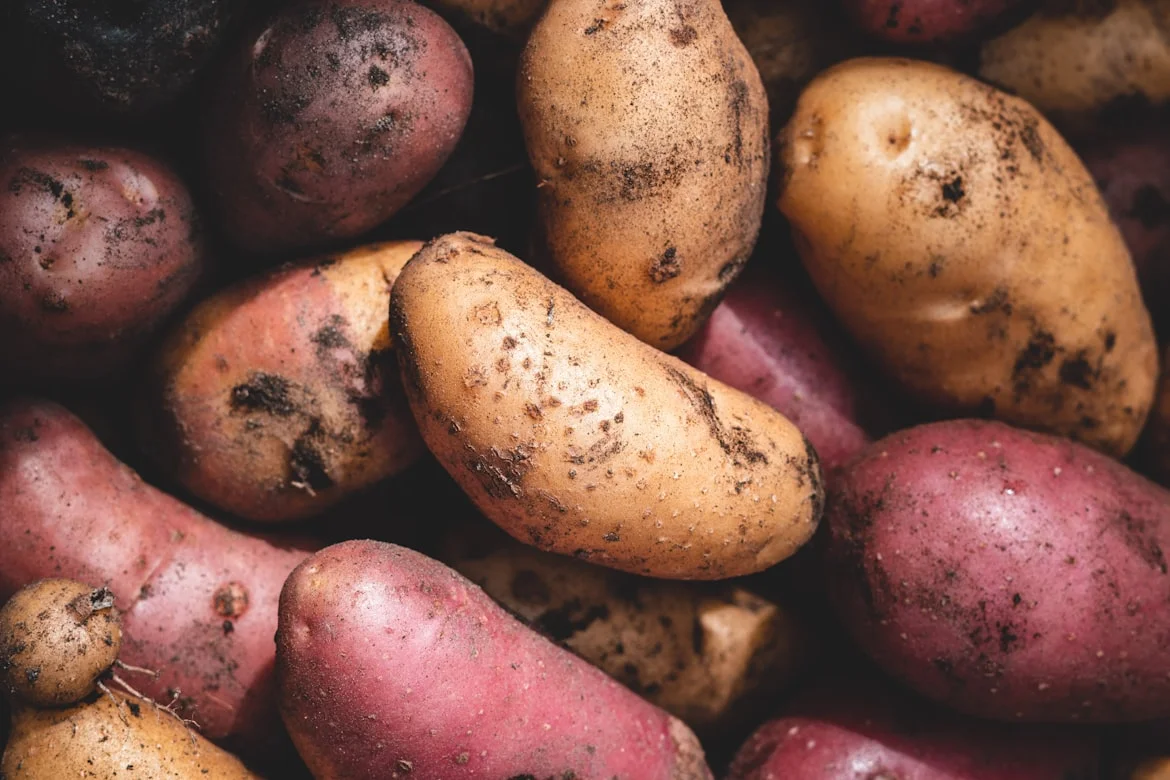
These are the reliable ones. The potatoes that keep their head when all about them are losing theirs (and their structural integrity). Think Charlotte, Anya, Jersey Royals, Ratte, and the brilliant Pink Fir Apple. They have a dense, almost crisp flesh that holds its shape through boiling, slicing, and the vigorous tossing of a summer salad.
My go-to is the Pink Fir Apple, a knobbly, misshapen thing that looks like it’s been dug up by a particularly enthusiastic mole. They’re a nightmare to peel, so I almost never bother: a good scrub and their skin adds a lovely earthy note. Because their moisture content is high and their starch is tightly bound, they won’t drink up vinaigrette like a sponge. They’ll be coated in it, glistening, each slice distinct. This is the quality you want for a Niçoise, a German potato salad (the warm, bacon-dressed kind is a thing of beauty), or for throwing into a slow-cooked beef bourguignon during the last 45 minutes. They’ll soak up flavour without turning to mush.
We obsess over heirloom tomatoes and single-origin olive oil, but we’ll grab any old bag of spuds for a quid and expect it to perform culinary gymnastics. It won’t.
A classic mistake I see is people boiling waxy potatoes for mash. Don’t. You’ll end up with a gluey, elastic paste that could feasibly be used to hang wallpaper. The high water content and stubborn cell structure mean they just won’t break down nicely. Save these for where structure is non-negotiable. They’re the steadfast friends of the potato world: unfussy, dependable, and brilliant at their specific job.
Floury Potatoes for Mash, Roasts & Chips
Here lie the potatoes of comfort. The King Edward, the Maris Piper, the Russet, and the glorious Golden Wonder. These are your high-starch, low-moisture spuds. When you cook them, the magic happens: the starch granules swell and burst, the cells separate, and you’re left with that ethereal, fluffy texture.
This is why a Maris Piper makes the world’s best roast potato. Parboil it, and the outside gets roughed up into a starch slurry that, when hit with hot fat, crisps into an impossibly golden, shattering shell, while the inside steams into a pillow-soft cloud. It’s a textural masterpiece. For mash, a floury potato is non-negotiable. They absorb butter and warm milk or cream greedily, whipping up into something smooth and luxurious without a hint of gumminess. My method? Steam them rather than boil. You get the same cooked result without waterlogging them, which means they take on fat more readily. Pass them through a ricer (a mouli is even better) for a consistency you simply cannot achieve with a masher.
And chips? Proper chips, I mean, fried twice. A floury potato is essential. The first fry at a lower temperature cooks the interior to that fluffy softness. The second, hotter blast creates the crisp exterior. A waxy potato would just give you a soggy, oily disappointment. The one caveat with these starchy marvels is that they have a short memory. They fall apart in soups and stews if cooked too long, which is actually a feature, not a bug, if you’re after a naturally thickened broth. Just don’t expect identifiable chunks after an hour’s simmer.
All-Purpose Potatoes
Desirée, Maris Peer, Yukon Gold. These sit in the middle, the compromise candidates. They have enough waxiness to hold a shape reasonably well, and enough starch to make a decent mash or roastie. They’re the safe bet, the potato you grab when you’re not quite sure what you’re doing for dinner yet.
And look, sometimes that’s fine. A Desirée will make a perfectly acceptable, mid-week mash. It’ll roast up alright. It’ll hold together in a stew okay-ish. But “perfectly acceptable” is the key phrase here. They rarely excel. In a professional kitchen, you’d never use an all-rounder for a specific task because why would you? You’d use the specialist. At home, I get the appeal of the one-bag-fits-all approach. But once you taste the crisp, waxy bite of an Anya in a salad versus the slightly woolly texture of a boiled Desirée, or experience the cloud-like mash from a King Edward compared to the slightly gluey version from an all-purpose spud, you’ll understand the gap between “fine” and “bloody lovely.”
You don’t win championships with utility players alone. You need your star strikers and solid defenders.
They’re the utility player, and every team needs one. But you don’t win championships with utility players alone. You need your star strikers and solid defenders. Think of these as your squad players for a Tuesday night frittata or a quick home fries breakfast: dishes where the potato is important, but not the singular star of the show.
Wild Cards & the Science Bit
Now, let’s have some fun. This spectrum isn’t a prison. Some potatoes play by their own rules. The Purple Majesty or Vitelotte is a great example. It’s floury in nature, making sublime mash of a shocking violet hue, but its flavour is intensely earthy and nutty, almost chestnut-like. It’s a conversation starter that also delivers on texture. Then you have new potatoes, which are simply any potato harvested young. They are, by definition, waxy because their starch hasn’t fully developed. A Jersey Royal, in its brief, glorious season, is the pinnacle of this, so sweet and firm, they need little more than a knob of proper butter and a sprinkle of Maldon salt.
This leads me to the demystification bit, because I can’t help myself. Why does any of this happen? It’s down to the ratio of two types of starch: amylose and amylopectin. Floury potatoes are higher in amylose, which forms a more rigid gel that traps air as it cools, giving you fluffiness. Waxy potatoes are higher in amylopectin, which forms a more flexible, sticky gel that holds things together. See? Not scary. Just plant chemistry. This is also why you should always start potatoes in cold water if you want them to cook evenly (hot water shocks the outside and makes it cook faster than the inside), and why adding a splash of vinegar to your boiling water can help waxy potatoes keep their shape even better: it strengthens the pectin in the cell walls. A little trick I picked up prepping for à la carte service, now useful for your picnic salad.
So, the next time you’re in the veg aisle, pause for a second. Are you building a salad, a stew, something that needs to stand proud? Go waxy. Are you dreaming of fluffy mash, perfect roasts, or chips worthy of the name? Go floury. Just need a spud to get you through? Fine, grab an all-rounder, but know what you’re compromising on. It’s the simplest, most effective upgrade you can make to your cooking, and it costs you nothing but a moment’s thought. Now, if you’ll excuse me, I have a bag of Maris Pipers waiting to be turned into roasties, and a fridge with some Keen’s Cheddar that needs using up in a potentially brilliant, potentially disastrous, fully loaded mash. Even experts have to experiment.