
8 min read · 1,650 words
Right. You’re standing in the supplement aisle, or scrolling through a site with more capsules than a pharmacy. Your eyes glaze over at the wall of promises: “Boost Energy!” “Sharpen Focus!” “Optimise Gut Health!”. You’ve probably got a niggling feeling something’s off: maybe you’re permanently at 3pm-level tired, your hair’s doing something weird, or you just can’t shake that cold. The finance bro next to you is loading his basket with enough pre-workout to power a small town, and the wellness influencer on your feed swears by a £90 “cellular detox” tincture. You’re smart enough to smell the bullshit, but not sure where the actual nutrition is buried. I’ve been that bloke, staring blankly at the B-complex section after a client session where I spent twenty minutes explaining that no, spirulina will not cancel out your four-espresso-a-day habit.
Let’s cut through the noise. Thinking about supplementation not as a magic bullet, but as a targeted repair job. You wouldn’t slather polyfilla over a crack in your foundation without checking why it’s there. Same logic. My approach, born from seven years of training clients and my own spectacular fails (we’ll get to those), is built on three pillars: The Non-Negotiables, The Context-Dependent, and The Lifestyle Bailouts. We’re not shopping for hope here; we’re shopping for specific compounds to fill specific, evidence-backed gaps that food alone sometimes can’t bridge, especially in a modern life that often looks nothing like what our biology expects.
What Almost Everyone Is Low In
We start here because these deficiencies are so common they’re practically a hallmark of 21st-century living. Sunlight is seasonal, soil quality isn’t what it was, and let’s be honest, how many of us are consistently hitting our five-a-day, every day, with variety? These are the supplements I consider public health advice in capsule form.
Vitamin D. The big one. I train clients in the City, where “sunlight” is the five-minute dash between the tube and a glass office tower. Even in summer, we’re slathered in SPF (which is good!), but it blocks the UVB rays needed for synthesis. The UK NHS recommends it from October to March; I’d argue most urbanites, especially those with darker skin like me (thanks, Dad’s Singaporean genes), should consider it year-round. This isn’t just for bones; its role in immune modulation and mood is well-documented. The form matters: Vitamin D3 (cholecalciferol). Take it with a meal containing some fat, avocado on toast, your morning eggs, for better absorption. A client of mine, a start-up founder who hadn’t seen proper daylight in months, was convinced he was chronically burnt out. We got his levels checked; they were in the basement. A D3 supplement didn’t solve his 80-hour weeks, but it took the permanent, heavy blanket of fatigue off his shoulders.
Magnesium. The unsung hero of about 300 biochemical reactions. Modern farming depletes soil magnesium, and processed foods are stripped of it. Are you stressed? Do you drink coffee? Exercise? Congratulations, you’re probably using up magnesium faster than you’re taking it in. The key is the form. Magnesium citrate is great for relaxation and, ahem, keeping things moving. Magnesium glycinate is my go-to for clients reporting poor sleep or muscle twitches, it’s highly bioavailable and gentle on the gut. I add a scoop of citrate to my post-training shake. It’s like hitting the off-switch on the nervous system buzz from a heavy session. Avoid magnesium oxide, it’s cheap, poorly absorbed, and mostly acts as a laxative.
We’re not shopping for hope here; we’re shopping for specific compounds to fill specific, evidence-backed gaps.
Omega-3 (EPA & DHA). Unless you’re eating oily fish (sardines, mackerel, salmon) two to three times a week, you’re likely deficient. The plant-based ALA from flax or walnuts is poorly converted. This is about the ratio: our diets are flooded with pro-inflammatory omega-6s (from vegetable oils, processed snacks), throwing the balance out of whack. A good fish oil or algae oil supplement (for the vegans) brings that ratio back. Look for a product that lists the amounts of EPA and DHA on the front, not just total “fish oil”. A high-strength one stopped my joints from creaking like a rusty gate after my rugby days, and I’ve seen it calm inflammatory skin conditions in clients where endless topical creams failed.
Gaps Your Plate Can’t Always Fill
This cluster is for when your diet has a specific, structural limitation. It’s not about universal deficiency, but intelligent insurance based on your choices. This is where blanket advice falls apart.
Vitamin B12. If you’re fully plant-based, this is non-negotiable, full stop. There are no reliable, unfortified plant sources. Even if you’re vegetarian or just cutting down on meat, your intake might be sketchy. Deficiency creeps in slowly, tingling, fatigue, brain fog, and can cause permanent nerve damage. I use a sublingual spray (under the tongue) for quick absorption, but a capsule works if you take it consistently. My mum, the nurse from Stevenage, drills this into every vegan patient she sees. She’s right.
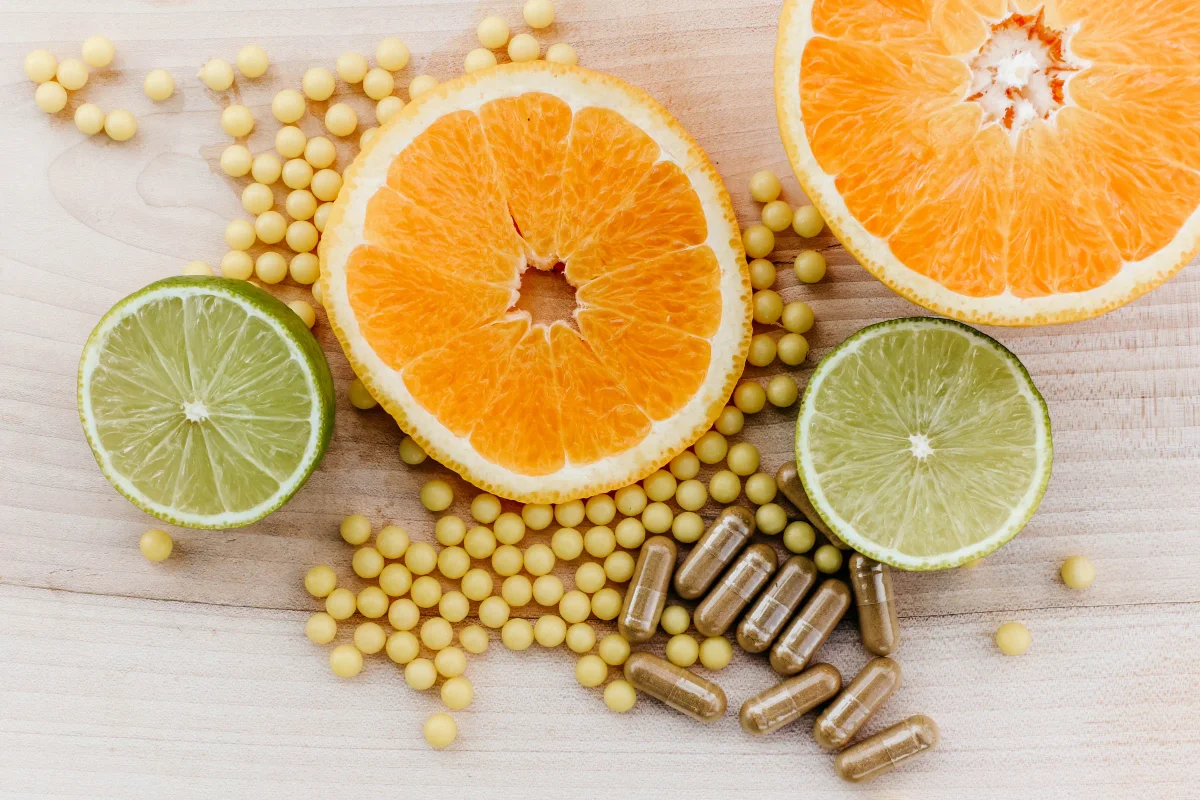
Iron. This is a tricky one, especially for menstruating women or endurance athletes. The plant-based non-haem iron is less readily absorbed. The culinary hack? Pair it with a source of vitamin C. A squeeze of lemon juice over your lentil dahl, or having a capsicum (that’s a bell pepper, for the Brits) with your spinach salad, can boost absorption significantly. Conversely, don’t take your iron supplement with a cuppa: the tannins in tea bind to it. I learned this the hard way during a misguided “performance” phase where I was drinking green tea like water and wondering why I was constantly gassed. A blood test revealed the issue. Now, I advise clients to take their iron with a glass of orange juice, or better yet, get it from slow-cooked meals like a beef and tomato ragu, where the acid from the tomatoes enhances the iron uptake.
Iodine. We ditched the salt shaker for health reasons (good), but switched to fancy sea salts or Himalayan pink salt that contain negligible iodine (less good). Iodine is crucial for thyroid function. If you don’t use iodised table salt and don’t eat dairy or seaweed regularly, you could be low. A kelp supplement is a simple fix, but dose carefully: too much is also problematic. I keep a sheet of nori in the pantry not just for sushi, but to crumble over salads or rice bowls for a subtle, mineral-rich boost.
When Your Life Gets in the Way of Your Diet
This is the pragmatic layer. You know what you should be eating. But sometimes life is a bin fire, your fridge contains a half-empty jar of tahini and existential dread, and you’re surviving on Gerrard Street dumplings (excellent choice, by the way). These aren’t replacements for food, but they’re damage control.
You’re not shopping for a transformation. You’re shopping for a specific compound to patch a specific, likely gap.
A High-Quality Protein Powder. I can hear the purists scoffing. “Just eat real food!” Sure. But when you’ve trained a client at 7am, have back-to-back editorial meetings in Shoreditch, and your next chance to eat is 3pm, a shake is the difference between functional and hangry. The key is in the framing: it’s a food ingredient, not a magic potion. I blend mine into oats, stir it into Greek yoghurt, or bake with it. My current favourite is an unflavoured whey isolate or a pea/rice blend that doesn’t taste like sweetened chalk. It’s the difference between hitting a decent protein target for muscle repair and falling short, which for my active clients, means the difference between progress and spinning their wheels.
A Comprehensive Multivitamin as an Insurance Policy. I used to hate these. Thought they were a cop-out. Then I started actually looking at the food diaries of time-poor, stressed clients. The gaps were glaring. A good multi isn’t a green light to eat crap. It’s a safety net for the days when “balanced” is a fantasy. Look for one with active forms of B-vitamins (methylcobalamin for B12, methylfolate), not the cheap cyanocobalamin and folic acid. It should contain zinc (for immune function) and a decent whack of the Bs for energy metabolism. Think of it as your nutritional seatbelt: you hope you don’t need it, but you’re glad it’s there on the bad days.
Creatine Monohydrate. The most researched supplement in sports nutrition, often misunderstood. It’s not just for bodybuilders. It helps recycle ATP, your body’s basic energy currency, which benefits high-intensity effort (think: that last sprint for the bus, a heavy weights session, chasing Veggo around the park). It also has emerging evidence for cognitive function. Every human body makes some, but we can only store so much. Supplementing saturates your muscles’ stores. It’s one of the few “more is better” scenarios where the evidence is rock-solid. I add 5g to my morning coffee: it’s tasteless, and after the first loading week (which you can skip, just take 5g daily), it’s a subtle but noticeable boost in training resilience.
The goal isn’t to build a pharmacy on your kitchen counter. It’s to build a targeted toolkit. Start with the Non-Negotiables: get your D, magnesium, and omega-3s sorted. That alone will put you ahead of 90% of people clutching their “wellness” shots. Then, honestly assess your Context: are you plant-based? An active woman? Adjust accordingly. Finally, be pragmatic about the Bailouts for when life happens.
My golden retriever, Veggo, has a far simpler approach: eat the beef, drink the water, sleep when tired. We complicate it with marketing and pseudoscience. The next time you’re in that overwhelming aisle, remember you’re not shopping for a transformation. You’re shopping for a specific compound to patch a specific, likely gap. And for everything else, there’s eggs, tofu, and the profound wisdom of knowing that an acai bowl is a nice breakfast, not a cure for existential dread. Now, if you’ll excuse me, I have a date with a Tim Tam and the distinct lack of guilt that comes from knowing my supplement regime is built on evidence, not hope.