
7 min read · 1,423 words
I was in a bakery in, let’s say, not Naples. A nice place, good light, beautiful displays. I see a sign: “Artisan Semolina Bread.” Bene, I think. I ask the baker, a young guy with flour on his apron, good sign, “What semolina are you using?” He looks at me, proud. “Oh, we use the finest durum wheat semolina, the same as for pasta.” I nod. I ask to see it. He brings out a bag. Fine, golden, perfect. Then I ask, “And your lievito? Your starter?” He smiles. “A very active sourdough, 100% hydration, fed with strong bread flour.” I closed my eyes. Uè, I could feel my nonno in Bacoli giving me the tottò from heaven. Right there, in that clean, bright bakery, was the whole problem in a dough bowl. He was using the pasta flour, but with the bread baker’s mind. He was treating semola di grano duro like it was just another white flour, and wondering why his crumb was tight, why the crust was too hard, why the flavor wasn’t singing. He saw the ingredient, but he didn’t listen to it.
This is where everyone goes wrong. They see “semolina” on a bag and think it’s one thing. It’s not. It’s a personality. And if you don’t understand its personality, you will fight with it, and you will lose. You’ll make dense breads, gritty pastries, and pasta that tastes like cardboard. The question isn’t “what can I make with semolina?” The real question, the one you’re too afraid to ask because it sounds mystical, is: how do I get this stubborn, golden grain to work with me instead of against me?
The biggest myth, the one that makes me want to slap some dough just to feel better, is that semolina is just “coarse flour.” Basta. Stop it. This isn’t about texture. It’s about bloodline. Semolina, semola rimacinata, durum wheat flour: these are not interchangeable toys. They are members of the same family, but one’s the strict uncle who builds walls and the other’s the cousin who makes them beautiful.
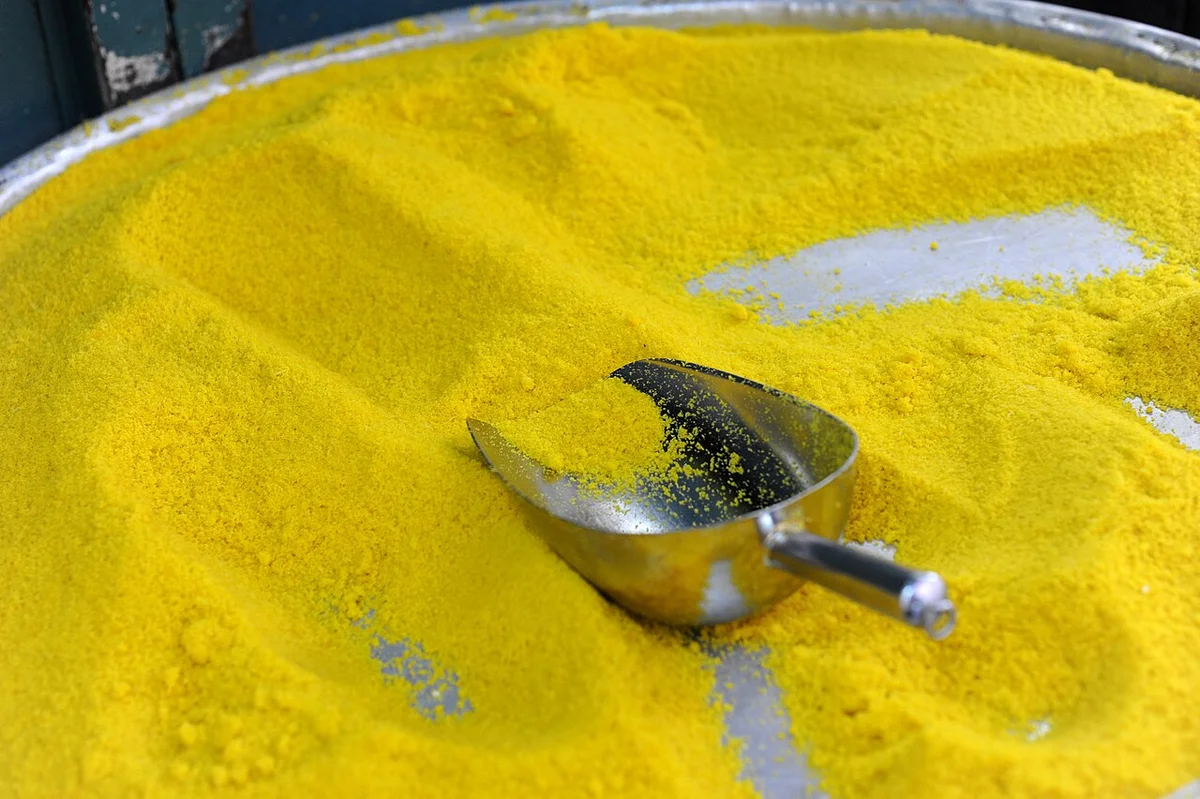
Durum wheat is a different beast. Triticum durum. Hard wheat. It’s high in protein, but it’s a different kind of protein, tough, elastic gluten that wants to form long, strong strands. It’s not the tender, extensible gluten of a soft wheat 00 that you use for a delicate cake or a silky pasta all’uovo. When you mill durum wheat, the first coarsest grind is semola. It’s granular, almost like fine sand. It’s for pasta secca, for extruding through bronze dies. It gives pasta that rough, sauce-grabbing texture and that beautiful yellow color. Then you mill it again, finer. That’s semola rimacinata, “re-milled” semolina. This is the magic one. This is for fresh pasta, for some breads, for pastries. It’s still durum, so it has the personality, but it’s been talked to nicely, persuaded to be a bit more cooperative.
How do I get this stubborn, golden grain to work with me instead of against me?
So when you grab a bag of “semolina” from the supermarket shelf in another country and it’s pale yellow and soft, you might not be holding durum. You might be holding a coarse grind of soft wheat. And that will behave like… flour. You’ve lost the point. You’ve lost the nutty, wheaty soul, the structural pride of the thing. My grandfather had two separate bins in the lab, labeled in his messy script: SEMOLA for the taralli, RIMACINATA for the cavatelli. He didn’t need the label; he could tell by running it through his fingers. The semola had a bite, a resistance. The rimacinata flowed like dense gold dust. That’s the decision you make before you even touch water: are you building a fortress or paving a road?
Which brings me to the second correction, the one that breaks more bakers’ hearts. You cannot treat semolina like a polite guest in your bread dough. You cannot just swap out 20% of your bread flour for it and expect a round of applause. It’s not a guest. It’s the new foreman on the job site. It changes everything.
Remember that baker? His mistake was hydrological. Semolina, especially true durum semolina, is thirsty. Incredibly, stubbornly thirsty. It drinks water like a fontanella on a July day in Naples. Your 65% hydration recipe? With semolina in the mix, that’s a desert. You’ll get a shaggy, uncooperative mass that never really comes together. You’ll add more flour to save it, and you’ve just created a brick. The dough won’t tell you it’s ready with a smooth, windowpane stretch. It’ll fight you, tear, and then sit in the proofing basket like a sulking child.
I learned this the hard way, not in a lab, but in a hot kitchen in Puglia, trying to make pane di Altamura. The old baker there, he didn’t measure water in grams. He looked at the flour mound, made a well, and started adding water from a jug until the consistenza was right. It was a wet dough, a sticky dough. But he worked it, not with a gentle fold, but with a purposeful, rhythmic slap and pull that developed the durum gluten without tearing it. He was hydrating the semolina, giving it the drink it demanded, and then organizing it. The takeaway is this: when semolina enters your recipe, increase your water. Significantly. And don’t be afraid of a wetter dough. Its strength can handle it. It wants it. The structure it builds with that water is what gives you that phenomenal, creamy-yellow crumb with the irregular holes, not a tight, damp sponge.
The dough won’t tell you it’s ready with a smooth, windowpane stretch. It’ll fight you.
Take the semolina gnocchi of Rome, the gnocchi alla romana. It’s milk, butter, semolina, egg, cheese. You cook the semolina in the milk like a polenta. What are you doing? You’re toasting the starches, developing a deep, cereal flavor, and creating a paste that sets firm when cool. It’s not a dumpling. It’s a baked custard’s cousin. That same principle is in the Sicilian cassata siciliana, or the filling of a good cannolo. The ricotta filling is often bound, ever so slightly, with a spoonful of fine semolina or even flour, cooked with the sugar. It absorbs excess moisture from the ricotta, preventing a soggy shell disaster. It’s a structural whisper, not a shout.
My favorite? The humble, glorious crostata di marmellata. Most recipes use just 00 flour. Boring. My nonno’s secret, and now it’s not a secret, was a frolla with a portion of semola rimacinata. Maybe 30%. Not enough to make it sandy, but enough to give the crust a subtle, irresistible granulosità, a gentle bite that contrasts with the soft jam. It makes the pastry interesting. It stands up to the wet fruit. You don’t taste “semolina”; you taste a more defined, wheatier, nobler butter cookie. That’s the decision: use semolina not for flavor dominance, but for textural intelligence. It provides a backbone so the butter and the fruit can shine without collapsing.
So, what’s the tottò of it all? The slap of reality? Stop looking at semolina as an ingredient to be used. Start listening to it as a material to be negotiated with.
You don’t just “add semolina.” You ask it: are you the star today, or are you the support? For pasta, you let it be the star, you give it just enough water to form an iron-willed dough, and you roll it with conviction. For bread, you welcome it as a powerful partner, you quench its thirst, and you work it with strength, not fear. For pastry, you invite it in as a wise elder, a little bit for wisdom and backbone, never enough to bully the butter.
The bag in your pantry isn’t just flour. It’s a sack of southern Italian sunlight, hard earth, and stubborn pride. It doesn’t want to be your friend. It wants to be your respected colleague. Show it respect, know its name, give it its drink, understand its job, and it will build you structures of gold. Treat it like just another powder, and it will build you a wall. And you’ll be on the wrong side of it, wondering why your bread didn’t rise. Now, if you’ll excuse me, I have a lievito madre to feed that’s older than this argument, and it’s waiting for its daily conversation.