
8 min read · 1,661 words
The sound of a hazelnut, a really good one from Giffoni, cracking under your teeth: it’s a clean, sharp snap. The sound of an almond? A deeper, more resonant crunch. You stand there in the middle of the market, testing them like this, and people look at you like you’re “o pazz” (a madman). But I’m listening. I’m listening for the story the nut is telling me about its oil, its freshness, how it will behave when I turn up the heat in my oven. Because if you don’t hear that story now, you’ll hear a much sadder one later, when your torta caprese comes out dry and bitter, or your almond paste weeps oil all over the baking sheet.
You see, in the laboratorio, nuts are not just ingredients; they are collaborators. Stubborn, fragile, magnificent collaborators. And like any good collaboration, it requires understanding, respect, and, sometimes, a very firm hand. I’ve seen too many talented hands defeated by a bag of rancid walnuts or a batch of almonds blanched with such violence they’ve lost their soul. So, let’s talk about how to bring them into your kitchen not as problems, but as partners.
Oil, Aroma, and the Fight Against Time
Everything with nuts begins with a single, undeniable truth: they are little vaults of precious oil. This oil is their glory and their curse. It carries the aroma: that deep, toasty, almost primal scent of a hazelnut, the sweet, floral whisper of a fresh almond. But that same oil is desperate to turn. It listens to the air, to the light, to the warmth of your kitchen, and it says, “Ah, perfect conditions for becoming rancid.”
My grandfather kept his nuts in the cantina, in metal tins, in the dark and the cool. He bought them in the shell and cracked them weekly. This wasn’t romance; it was warfare. Warfare against time. Your first decision with any nut is logistical: how will you protect its fat? Buying in small quantities from a shop with high turnover is not being fussy. It’s being strategic. If you must buy bulk, you must become a tyrant of storage. Glass jars. Dark cupboards. Or better yet, the freezer. Yes, the freezer. I freeze all my nuts, even the expensive PGI ones from Campania. It suspends the clock. That bitter, paint-like aftertaste of rancidity? That’s the taste of lost battles. We don’t accept that taste here.
And before they even hit the pan, you must meet them on their own terms. Taste one. Listen to it. A fresh nut has a clean, sweet finish. A stale one leaves a vague, unpleasant coating on your tongue. If it doesn’t sing to you raw, it will scream at you burnt in the oven.
Almonds & Hazelnuts
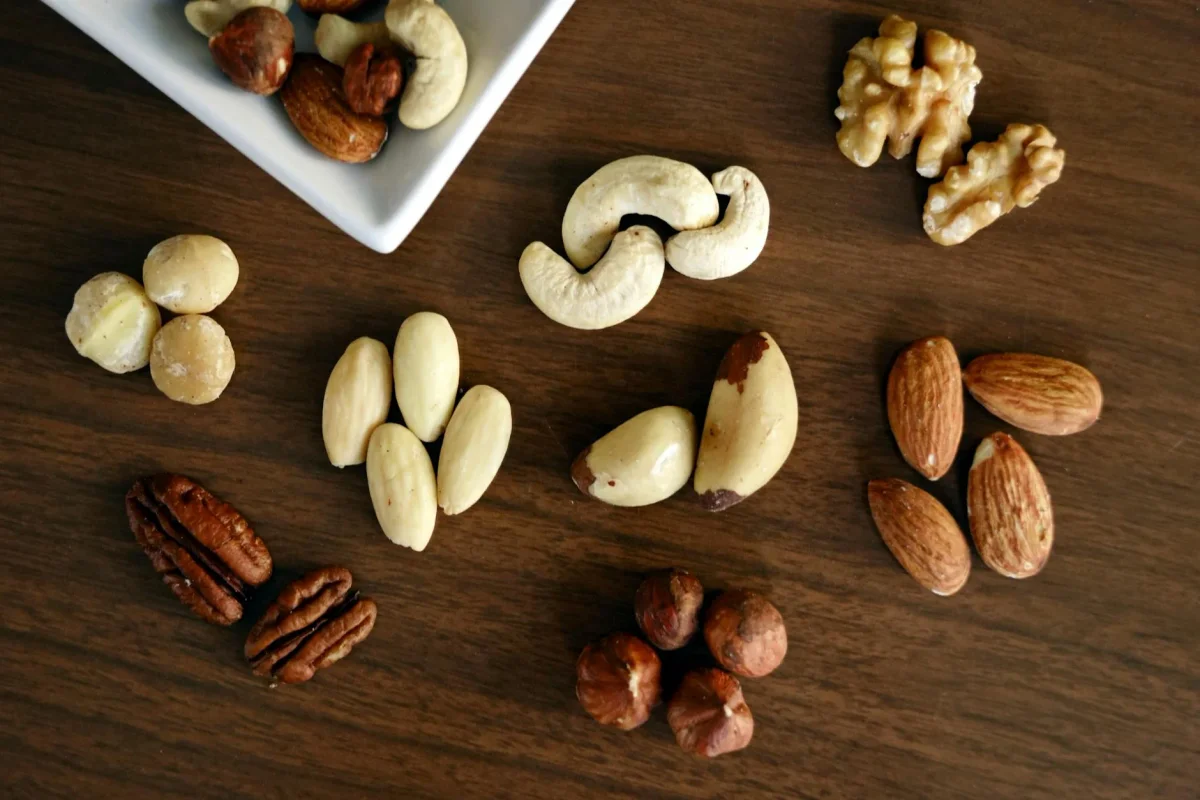
These two are the pillars. They are your fondamenta. In my world, you cannot have a laboratorio without them. But uè, they are not the same person. Treating them as interchangeable is like substituting water for wine in a sacramental rite: structurally similar, spiritually a catastrophe.
Nuts are not just ingredients; they are collaborators. Stubborn, fragile, magnificent collaborators.
Almonds are the architects. They provide structure. Ground almonds in a cake? That’s not just flavor, that’s texture and moisture built from the ground up. They absorb fat and egg, they hold their shape. Think of a pasta di mandorla, almond paste. It’s pliable, it’s sturdy, it can be molded and baked and it will keep its form. That’s the almond’s character: reliable, solid, a builder. When you blanch them, you’re not just removing a skin; you’re revealing their pure, sweet, slightly floral heart. That skin holds bitterness, and in many applications, like a smooth, elegant frangipane or a delicate amaretti: we don’t want that fight. We want the almond’s gentle cooperation.
Hazelnuts are the poets. They are all about aroma. That deep, roasty, almost woodsy fragrance is volatile. It’s a spirit you have to trap. This is why we always toast hazelnuts. Always. Raw hazelnuts are shy, muted. You apply heat, and you’re not just cooking them; you’re conducting an orchestra of compounds that create that magic smell. But here is where people go wrong: they toast for color, not for sound. You must listen. They go quiet. The frantic sizzle of their oils heating up settles into a soft, whispering frizzle. Then you smell it: that deep, nutty perfume fills the kitchen. That’s when they’re done. A moment longer, and the poetry turns to acrid prose.
Their skins are a different conversation. Rubbing them in a towel after roasting removes the bitter tannins, yes, giving you a cleaner, sweeter nut for a gianduia or a fine paste. But sometimes, for a torta di nocciole where you want a more rustic, robust character, a little skin left on is like a grain of salt in caramel: it heightens the complexity. You decide based on the final poem you want to write.
Walnuts, Pistachios & Pine Nuts
Now we enter the realm of the specialists. These are not everyday nuts; they are for specific, intentional moments. They are more expensive, more fragile, and they demand your full attention.
Walnuts are the philosophers: deep, complex, but prone to melancholy (rancidity). Their flavor is tannic, almost leafy, with a soft crunch. They hate being chopped too fine; it bruises them, releases their bitterness prematurely. I fold broken walnut pieces into an autumnal torta di mele at the very last moment, or use them whole, toasted, as the crowning glory on a sweet cheese filling. They are a supporting actor, not a lead. And you must buy them incredibly fresh, usually in autumn, and freeze them immediately. Their oil is the most treacherous of all.
Pistachios are the divas. The real ones, from Bronte, have a color that no paste from a tube will ever replicate: a muted, uneven, glorious green. Their flavor is singular: sweet, almost creamy, with a faint resinous background. Because they are so precious, you use them where they will be seen and tasted. Ground into a paste for a filling, yes, but always saved some, roughly chopped, for the top where their color and texture can shine. Toasting them is a delicate affair; a blush, nothing more, or you murder their delicate perfume and turn them the color of mud.
Pine Nuts are the fleeting dream. They are almost all fat. Toasting them is a high-wire act, thirty seconds too long and they are gone, bitter and burnt. Their role is punctuation. A scatter over a torta della nonna before baking, where they toast gently in the oven’s heat. A crunch in a biscotto. They are never the main event, but without them, the sentence isn’t finished. And please, for the love of all that is holy, taste one before you use them. The wrong pine nut can leave a metallic, haunting bitterness that ruins everything it touches, what we call “pine mouth.” It’s a real thing, and it’s devastating.
The laboratorio is never silent. The nuts talk. The quiet tick tick tick of pine nuts toasting in a pan, the deep hum of the grinder, the crack of a shell.
Heat, Grind, and Bind
This is where you move from collector to creator. The application of force and heat.
Grinding is not just blitzing. It’s a textural decision. A fine, powdery grind for a smooth cake crumb. A coarse, mealy grind for rustic cookies that have bite. And for the love of your machine, pulse. Do not just let it run. You are not making nut butter (unless you are, which is a different lesson). You are looking for an even, controlled rubble. If you grind too long, the heat from the blades will start to cook the nuts, releasing their oil and turning your beautiful powder into a sticky, clumpy paste. This is why we often add a spoonful of the recipe’s sugar or flour to the processor: it absorbs the oil, keeps the particles separate.
Toasting is where you develop soul. As I said, for hazelnuts, it’s non-negotiable. For almonds, it depends. For a marzipan where you want pure, sweet flavor? No. For an almond biscotti where you want a deeper, toasted backbone? Absolutely. A single layer on a sheet tray, a moderate oven, and your nose as the timer. The line between fragrant and scorched is a fine one, and it’s a line you only learn by burning a batch or two. I’ve burned my share. It’s a good teacher.
Binding is the final marriage. Nuts, especially when ground, are thirsty. They will suck the moisture from a batter if you let them. This is why recipes with high nut content often have no flour, the nuts are the structure. They bind with egg. They need that protein to create a cohesive, moist crumb, like in a torta caprese. You cannot overmix a batter like that; you fold with intention, just until the nuts are hydrated. It’s a feeling, the batter goes from shaggy and dry to suddenly cohesive and heavy.
So, you see, it’s a method. First, you protect them from their own nature. Then you choose your pillar or your specialist based on the job: structure or aroma, lead role or punctuation. Finally, you transform them with controlled force and heat, listening and smelling every step of the way.
The real secret, the one my grandpa showed me when I was knee-high to the marble counter, is that the laboratorio is never silent. The nuts talk. The quiet tick tick tick of pine nuts toasting in a pan, the deep hum of the grinder, the crack of a shell. You have to be quiet enough to hear it. Last week, a student was toasting almonds for a croccante. He was watching the clock. I walked over, shut the oven timer off, and said, “Listen.” We stood there. And then we heard it: the faint, soft sigh of their oils reaching the perfect point, a smell like toasted bread and flowers filling the air. His eyes got wide. “They’re singing,” he said. Exactly, bello. Exactly. Now you’re not just baking. You’re conducting. And the music, I promise you, is beautiful.