
9 min read · 1,844 words
You know that feeling, when you’re staring into the pantry at 6 PM and the only thing that looks back at you, reliably, is that bag of lentils? It’s not exciting. It’s just… there. A brown bag of little beige discs that you bought with good intentions, probably for a soup you made once. I get it. For years, I saw them the same way: a monolith. A single, slightly dusty ingredient category. It wasn’t until I was in a tiny enoteca in Rome, arguing with Pietro about what to make for a cena veloce, that it clicked. He wanted pasta, I wanted something lighter. We had lentils. “Zuppa, allora,” he said, already reaching for a pot. But I’d made lentil soup three times that month. I pushed the bag toward him. “No. Not soup. Something else.” He looked at the lentils, then at me, and shrugged. “Allora, dobbiamo scegliere le lenticchie giuste.” Then we have to choose the right lentils.
That was it. The hinge. We weren’t choosing lentils. We were choosing which lentils. Because the little green ones from Castelluccio he had in the cupboard for a salad were not the same creature as the brown ones I’d been boiling into oblivion for soup. They were different tools. I’d spent a decade being professionally nosy about olive oil press dates and bean crop years, but I’d been treating all lentils like they were interchangeable. It was a blind spot, and a big one. The question wasn’t “what can I make with lentils?” It was, “what do I want to make, and which lentil will get me there without a fight?”
So let’s talk about lentils not as an ingredient, but as a spectrum of possibility. Your goal isn’t to master a lentil recipe. It’s to build a mental model where you match the lentil’s inherent personality, its structure, its flavor, its disintegration point, to the job you need it to do. This is about ending the one-size-fits-all approach. Because using the wrong lentil for a task is like trying to make a silk blouse out of burlap. You can force it, but you’ll be frustrated, and the result will be all wrong.
The first decision, the one that changes everything, happens before you even turn on the stove. It’s about texture architecture. You have to ask yourself: do I need this lentil to hold its shape with dignified resolve, or do I need it to surrender and become part of a greater whole? This is the foundational choice.
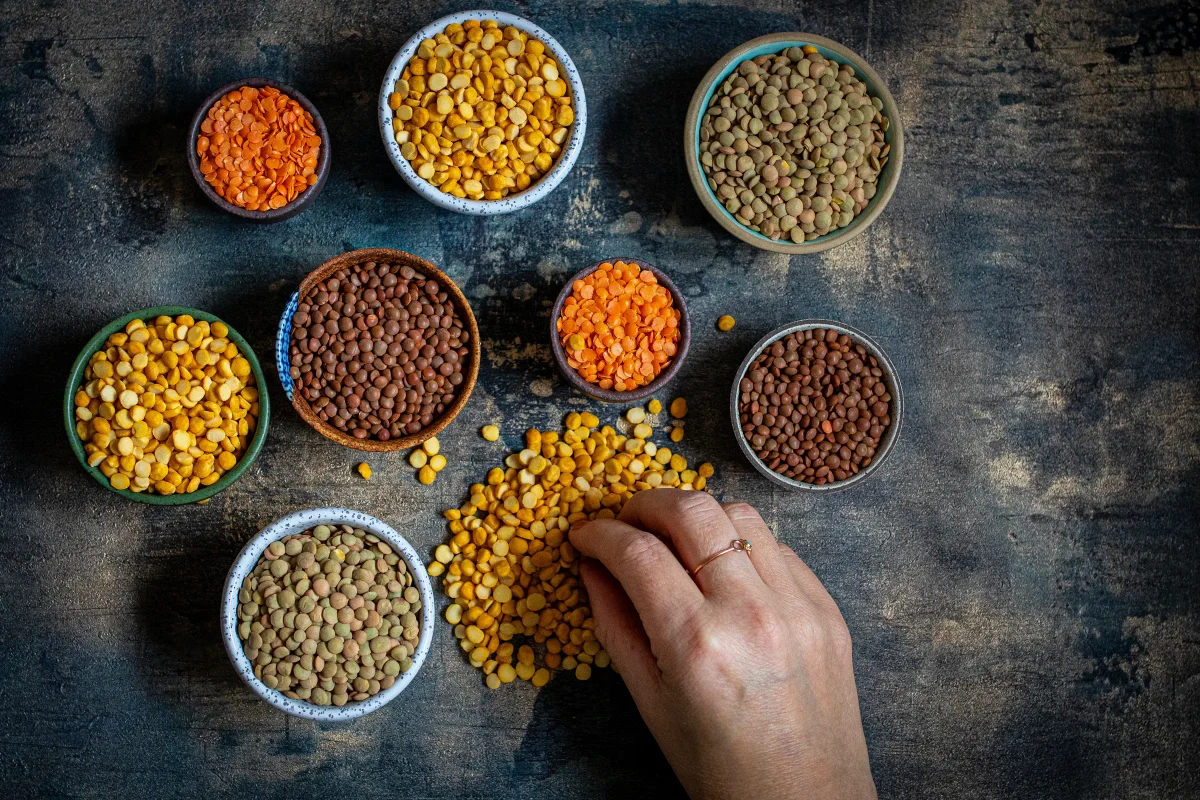
For the holders, the ones with structural integrity, you want the small, firm varieties. Think French lentilles du Puy, those slate-green, blue-marbled beauties, or their Italian cousin, the lenticchie di Castelluccio. They have a thicker seed coat. When you bite into one after cooking, there’s a slight pop, then a creamy interior. They keep their composure. This is why they’re the only choice for a true lentil salad. You can dress them while they’re warm, let them soak up a good salsa di acciughe or a mustardy vinaigrette, and they won’t turn to mush in the fridge overnight. They’ll actually improve. I learned this the hard way, trying to make a salad with common brown lentils for a picnic. By the time we unrolled the blanket, I had a lentil paste. A delicious paste, but a paste nonetheless. The lenticchie di Castelluccio I buy now from a tiny importer? I’ve kept a salad of them in the fridge for three days, and on the third day, they were still themselves. That’s the kind of reliability you build a meal around.
We weren’t choosing lentils. We were choosing which lentils.
On the other end of the spectrum are the surrenders. The red lentils, the yellow lentils, the ones that are often sold split with their skins removed. They are the builders of body. You don’t cook them to a texture; you cook them into a texture. They are your secret weapon for velvety soups, Indian dal, or for thickening a stew without flour. They dissolve into a creamy, almost buttery consistency that is deeply satisfying. This is where my Oaxacan upbringing whispers in my ear, because it’s the same principle as when my abuela would toast and then blend guajillo chiles for her caldos: you’re not adding pieces, you’re adding the very essence of depth and thickness. You wouldn’t blend a lentille du Puy into a soup any more than you’d leave a whole guajillo chile floating in your broth. You choose the tool for the job.
And then, living in the middle, are the everyday brown or green lentils. They’re versatile, but you have to manage them. They’ll hold a shape if you’re vigilant and pull them off the heat just as they turn tender, but they can slide into mushiness if you look away for a minute. They’re the practical choice, the “it’s Tuesday and I need a side dish” lentil. But even here, sourcing matters. Please, check the bag. If there’s no crop date, be suspicious. Old lentils from who-knows-when take forever to cook and never really soften properly. They stay little rocks. A fresh crop of brown lentils, from the last year or even the current year, is a completely different ingredient: it cooks evenly and has a clean, earthy flavor. That’s the difference between a good side dish and a pot of disappointment.
Once you’ve chosen your lentil based on its destiny, you have to cook it with intention. This isn’t just boiling beans. You are conducting a flavor negotiation. The liquid you use is your primary bargaining tool. Water is neutral, but it’s also a missed opportunity. For a soup where the lentil is the star, I almost always use a light vegetable or chicken broth. It’s a simple upgrade that builds a foundation. But for a side dish, especially one accompanying a rich meat, I go the other way. I sauté a sofrito of onion, carrot, and celery in good olive oil until it’s sweet, then I add the lentils (the brown ones, usually) and cover them with water. Why? Because I want the lentil’s own earthy flavor to be clear and distinct next to, say, a braised pork shoulder. I don’t want it competing with a meaty broth; I want it providing a clean, starchy counterpoint.
The aromatics are where you can really show your hand. A bay leaf is non-negotiable for me: it’s the quiet background note that makes everything taste more like itself. For a French-inspired dish, a bundle of thyme and parsley stems does wonders. But if I’m leaning into the lentil’s earthy side for a warm salad, I’ll infuse the cooking water with a whole clove of garlic and a strip of lemon peel. It’s subtle, but it lifts the flavor. You’re not masking the lentil; you’re framing it. My Italian suocera taught me her trick for lentils that will be served with cotechino for New Year’s: she simmers them with a whole, peeled tomato. The tomato breaks down completely, giving the lentils a faint sweetness and a gorgeous rosy-gold color. It’s a single ingredient that does the work of ten.
The power isn’t in following instructions. It’s in understanding the material you’re working with.
This brings me to the philosophy of the supporting cast, which is really a philosophy of restraint. Lentils are a social ingredient; they play well with others. But they can be easily overwhelmed. You have to think of them as the canvas, not the paint. A lentil soup doesn’t need fifteen vegetables. It needs one or two that complement. A classic lenticchie in umido might just have carrot and celery. A side dish for fish might be lentils with a fine dice of fennel and a pinch of fennel pollen. When I make a warm salad with those firm lentilles du Puy, I keep the additions textural and bright: some chopped cornichons, a handful of flat-leaf parsley, maybe some toasted walnuts. The lentils are the main event. The dressing is just a good olive oil, a squeeze of lemon, salt, and pepper. If you start adding roasted red peppers, artichoke hearts, sun-dried tomatoes, and goat cheese, you lose the point. You’re just making a bowl of stuff.
And of course, fat is the finisher. This is non-negotiable. A drizzle of your best, fruit-forward extra virgin olive oil over a bowl of lentils just before serving is like turning on the lights. It brings all the flavors into focus. For a richer dish, a knob of butter stirred in at the end creates a silky, luxurious sauce. In my house, we argue about this. Pietro is a butter man for his lenticchie. I am, almost always, an olive oil woman. But we agree that the fat must be of quality, and it must be added at the end. Cooking the fat in at the beginning is not the same thing. That final, unheated addition carries the aroma and the richness directly to your palate. It’s the difference between a dish that’s merely cooked and one that’s finished.
So what’s in my pantry? Not just “lentils.” I have a jar of lenticchie di Castelluccio for salads and elegant sides. I have a bag of common brown lentils from a fresh crop for everyday sides and sturdy soups. And I always, always have split red lentils in a sealed jar for when I need comfort in 25 minutes: a quick dal, a creamy soup, a thickener for a vegetable stew. They are three different tools.
The real takeaway is this: stop looking for the one perfect lentil recipe. Instead, build your own. Look at what you have. Want a salad? Grab the small, firm ones. Want a creamy, comforting soup? The split red ones are your friend. Just need something to soak up the juices on a plate? The brown ones, cooked with care, will do it. The power isn’t in following instructions. It’s in understanding the material you’re working with. It’s the same as knowing that a young Parmigiano-Reggiano is for shaving over asparagus and a 36-month-old is for grating into your ragù. They’re both Parmigiano, but they’re not the same.
Last week, my niece video-called me from her first apartment, looking panicked. She was making a soup, and the lentils were “not doing anything.” I asked her to show me the bag. They were old, from the back of a supermarket shelf, no date in sight. “They’re fighting you,” I said. “It’s not you. It’s them. For tonight, add a pinch of baking soda to the water to help them along, and let it be a lesson. Next time, buy from a place that tells you when they were harvested.” She did, and texted me later: “It worked! Also, I drank the last of the olive oil from that bottle you gave me. On the soup.” That’s it. That’s the whole story. Choose with purpose, cook with intention, and always, always finish with the good oil. Your pantry is your secret weapon, but only if you know what each soldier in the ranks is actually capable of.