
6 min read · 1,173 words
She was about to pour, and I saw the hesitation in her eyes: a flicker of guilt, as if I, the sauce editor, had caught her in a culinary sin. “I know, I know,” she said, preemptively. “But it’s just so easy.” I stopped her. Not to scold, but to taste. We dipped a leaf each. It was… fine. Perfectly acceptable for a Tuesday night when the children are screaming and the work emails are piling up. The real error wasn’t the bottle. It was the belief that her homemade vinaigrette, whipped up in a hurry with tired, old oil and a blunt squeeze of lemon, would have been inherently superior. That is the myth we must correct: the blind faith in “from scratch” as an absolute moral good. Sometimes, the alchemy happened in a factory far away, under conditions you cannot replicate, and your job is not to recreate, but to recognize. To choose wisely is the true skill.
This belief that homemade is a sacred, unimpeachable standard: it ignores the fundamental question of transformation. In French kitchens, we learned that transformation is everything. You start with butter, shallots, vinegar, and through patience and heat, you create beurre blanc. But if your shallots are sprouting, your vinegar has lost its bite, and you’re too distracted to watch the emulsion, what have you transformed? Garbage in, garbage out, as they say. A high-quality commercial product starts with ingredients selected for consistency, processed with equipment that achieves a specific, stable result. My mother’s Ivorian sauce graine, made from palm nuts, requires a pounding and a simmering that takes hours and a specific touch I still struggle to match. When I fail, it’s a watery, bland disappointment. When the jar from the specialty shop in Abidjan succeeds, it is the taste of my childhood. The goal is the flavor on the plate, not the martyrdom in the kitchen.
The goal is the flavor on the plate, not the martyrdom in the kitchen.
Let’s talk about fish sauce. You must have Red Boat. I insist on this not as a snob, but as a pragmatist. The first time I tried to understand nam pla, I bought three bottles from a local Asian market. One was chemical, harsh, a slap of salt and little else. Another was muddy. The third, with the simple blue label and the number 40°N on it, was different: complex, funky, deep, like the ocean after a storm. This is a product of transformation, anchovies and salt, fermented and aged in wooden barrels, that depends on raw material quality and controlled time. You could not make this in your Los Angeles kitchen. The climate is wrong, the anchovies are different, the time required is prohibitive. Here, the commercial version doesn’t just win; it is the only version. To choose the right one is to understand its role: not as a standalone ingredient, but as a foundational umami note, the bass line in the symphony. A teaspoon in a beef bourguignon does something magical no homemade stock can achieve: it adds a layer of savory depth that reads as “more meaty” without being fishy. That is its purpose.
Then there is the matter of emulsion science, which many well-meaning home cooks fundamentally misunderstand. Mayonnaise is the classic example. A good homemade mayo, with a neutral oil and a bright lemon yolk, is a beautiful thing. But it is fragile. It breaks if your ingredients aren’t the same temperature, if you add the oil too fast, if you look at it sideways. And its shelf life is measured in days. Now, consider Kewpie mayo. That iconic squeezy bottle with the baby on it. Its texture is unctuous, creamy, and stable. It holds its form in a potato salad left in the sun at a picnic. This is because of its formulation and its equipment. The monoglycerides, the specific type of vinegar, the high-pressure homogenization: these are not cheats. They are tools for achieving a specific, reliable result. When I make a Japanese-style potato salad or drizzle a topping over okonomiyaki, I reach for Kewpie. The homemade version would be an inferior imposter, lacking that specific umami-rich, slightly sweet profile. The commercial product here isn’t a substitute; it is the authentic ingredient.
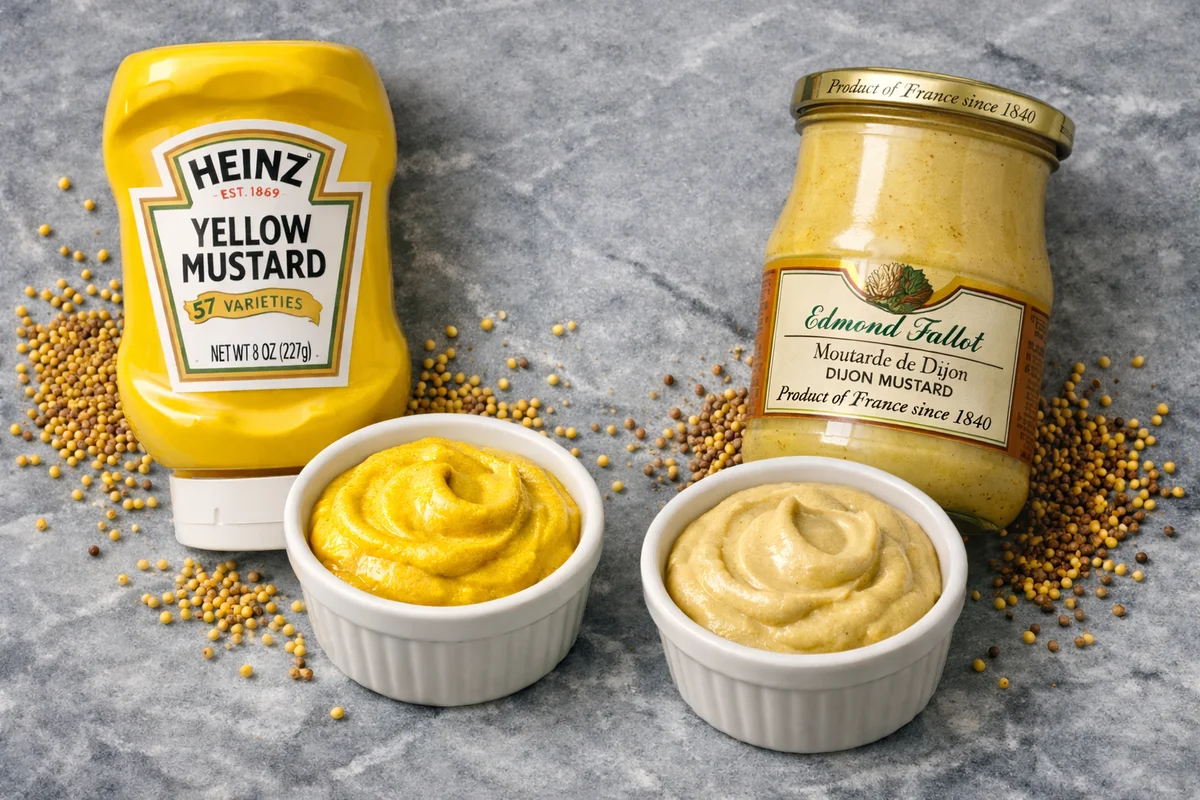
And what of Dijon mustard? I have Fallot’s in my fridge, always. I have also, in a fit of curiosity, tried to make mustard from scratch. It was a fascinating, tear-inducing experiment that resulted in something sharp, gritty, and wildly inconsistent. Fallot’s has been perfecting their moutarde since 1840. They know the exact varietal of brown seeds, the precise acidity of the verjuice, the aging required to mellow the heat without losing the punch. My homemade version was a science project. Theirs is a cornerstone of cuisine. It is the starting point for a hundred sauces: the base for a marinade, the emulsifier for a vinaigrette, the sharp note in a sauce charcutière. Using the superior commercial product isn’t a shortcut. It’s building on a foundation laid by generations of expertise. It allows you to focus your energy on the transformation that happens next.
Your cooking becomes not a test of purity, but an exercise in intelligent composition.
This brings us to the quiet, unspoken truth about time and intention. We have limited resources: time, attention, mental energy. The philosophy I’ve built, from Abidjan to Berlin to Los Angeles, is about strategic allocation. If you spend forty-five minutes painstakingly toasting and blending spices for a curry paste from scratch, only to be too exhausted to properly cook the onions, to get them to that perfect, translucent sweetness, you have wasted your effort. You have prioritized the wrong transformation. I would rather you use a excellent, prepared Thai curry paste, one with a clean ingredient list, and focus all your intention on the tamiser of your aromatics, on the careful simmering of the coconut milk. Let the factory handle the base note. You conduct the symphony. The beautiful chaos of my refrigerator, the gochujang beside the tamari beside the sauce graine, is a toolkit, not an indictment. Each jar represents a decision: this is where I invest my own labor, and this is where I gratefully accept the labor of others.
So, the next time you reach for that bottle, do not feel a pang of guilt. Feel curiosity. Taste it. Ask yourself: what did the makers intend? Does it achieve a balance, that dance between acid and fat, salt and sweet, umami and heat, that I would struggle to replicate? Does it provide a consistency or a shelf stability that serves my life? My fridge door is a testament to this philosophy. The homemade vinaigrettes are there, for when I have the perfect shallot and the time to whisk. Beside them sits the Kewpie, the Red Boat, the Fallot’s, the good gochujang. They are not adversaries. They are my brigade de cuisine, each member chosen for a specific strength. Your cooking becomes not a test of purity, but an exercise in intelligent composition. Flavor, after all, knows no borders. And neither should your good sense. Ça suffit.