
7 min read · 1,353 words
I was halfway through a shift at Hot Numbers, deep in the 3pm slump, when a customer pointed at our tea menu and asked, with genuine confusion, “But why would I pay a fiver for a pot of leaves when I’ve got a box of PG Tips at home?” He wasn’t being difficult. He’d just been told, probably by someone like me five years ago, that “loose leaf is better,” full stop. And that unhelpful, binary commandment had left him with no way to understand when it matters, why it might be worth it, or if his PG Tips habit was somehow a moral failing (it’s not).
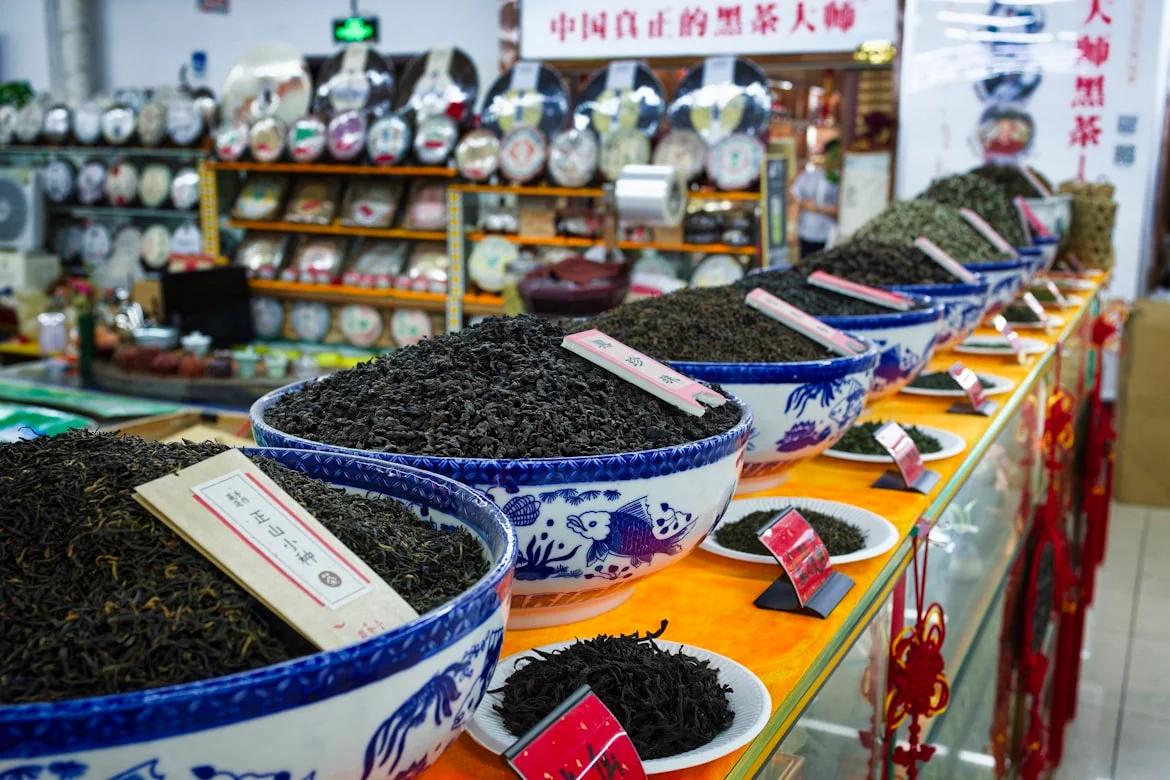
It’s the same energy as the light roast vs dark roast debate in coffee: people get handed a rule without the reasoning, so the rule feels both arbitrary and vaguely judgmental. My own tea journey started with spiteful rejection of the mandatory British cuppa, only to be completely rewired in a Hangzhou tea market where the vendor didn’t just sell me a longjing; he made me smell the dry leaves, then the warmed leaves, then brewed it in a glass so I could watch the tiny hairs drift. That experience wasn’t about “bag vs loose.” It was about connection. The problem isn’t the tea bag. It’s the assumption that the conversation ends there.
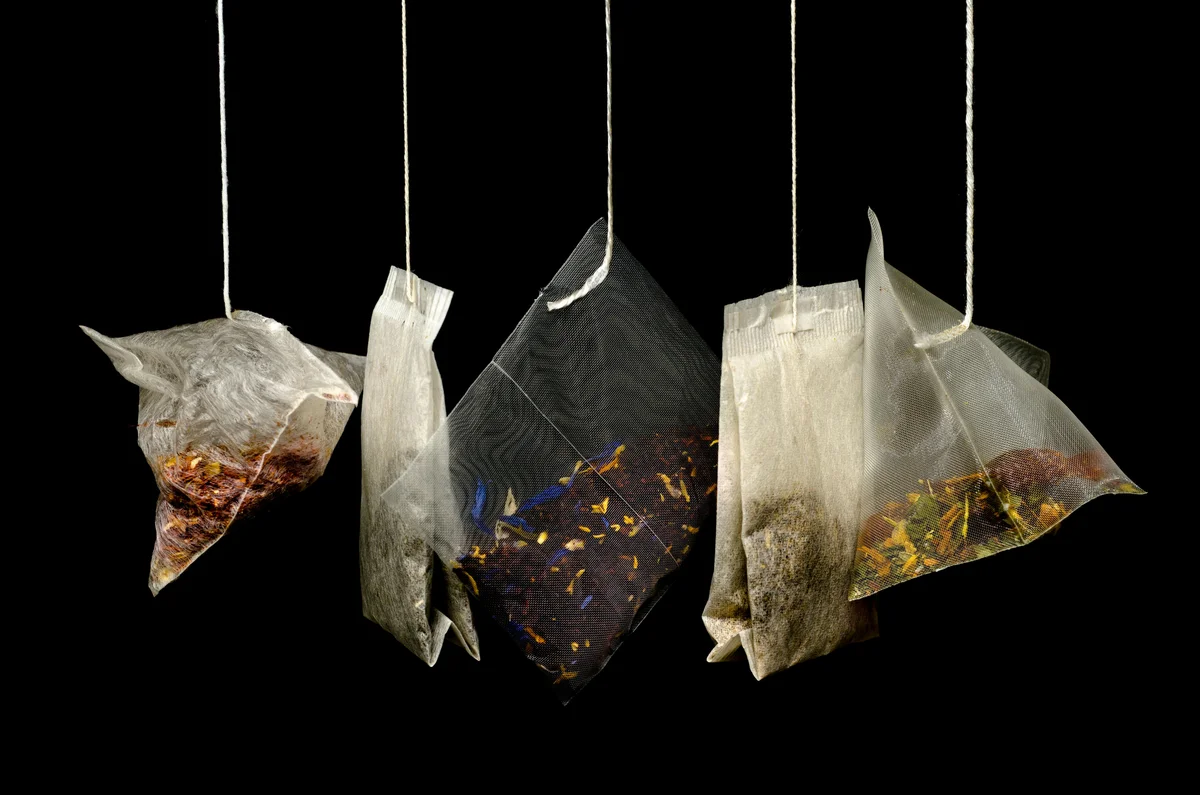
The most persistent myth is that tea bags are filled with “dust” because it’s inferior, full stop. It’s more accurate to say they’re filled with small particles because that’s what works for the format, fast, consistent extraction in a tiny, porous prison. Calling it all “dust” is a bit dramatic (though some of it absolutely is). The real issue is what gets lost in that engineering. When you chop tea leaves into tiny pieces, you massively increase surface area. This means flavour and caffeine hit the water fast and hard, which sounds efficient, but it also means the more delicate, complex volatile compounds, the ones that give a Taiwanese dong ding its creamy orchid note, or a first-flush Darjeeling its muscatel zing: often get overwhelmed or evaporate before you even lift the mug. You’re left with the loudest voices in the room: bitterness, astringency, and a generic “tea” flavour.
I learned this the hard way when I tried to make a proper gyokuro in a bag for a laugh (and also because I was procrastinating on my thesis). I ground the precious leaves, shoved them into an empty bag, and brewed it. What I got was a violently green, intensely bitter broth that tasted of grass clippings and regret. The controlled, low-temperature steep that coaxes out gyokuro’s savoury umami and sweetness relies entirely on the whole leaf unfurling slowly. Chop it up, and you murder the process. So, a bag isn’t inherently evil, but it is a blunt instrument. It’s optimised for strength and convenience, not nuance. Deciding to use one is a culinary decision to prioritise those things, which is perfectly valid for a strong, milk-ready breakfast tea. It’s a disaster for a delicate white peony.
Calling it all “dust” is a bit dramatic (though some of it absolutely is).
This leads to the second, sneakier error: that “quality” is a single, universal metric. We treat it like a score out of ten. But quality for a builder’s mug at 6am and quality for a contemplative afternoon session are two different beasts. My spreadsheet of 200+ teas isn’t ranked on a linear scale; it has columns for “best use case.” A robust, malty Assam might be a 9/10 for waking up with oat milk, but a 2/10 for sipping neat while trying to taste terroir. The “quality” of a tea bag lies in its consistency, its ability to deliver a predictable hit every single time, which is a genuine engineering achievement. The “quality” of the Da Hong Pao in my cupboard lies in its story, the rock mineral taste from the Wuyi cliffs, the layered roast, and its ability to be re-steeped eight times, evolving each round.
I have a mate, Gemma (yes, the one who believes in “teatoxes,” we don’t talk about that), who only drinks fancy whole-leaf Jasmine Pearl tea. She scoffs at bags. But she also brews it with boiling water in a giant mug and leaves it stewing for ten minutes. The execution here is, frankly, more offensive than any bag. She’s turning those beautiful hand-rolled pearls into a bitter, floral punishment. The leaf’s potential quality is irrelevant if your technique works against it. Sometimes, a well-made bag brewed for the correct two minutes is a higher-quality experience than a butchered luxury loose leaf.
Then there’s the gatekeeping around “authenticity,” which usually involves someone pronouncing oolong incorrectly while telling you your grocery-store tea isn’t “real.” Let’s be clear: the tea in a bag is, chemically, real tea. It’s Camellia sinensis. The authenticity trap is a dead end. What’s more useful is thinking about intent. A mass-produced bag is designed for a standardised, shelf-stable, one-and-done product. The intent is convenience and broad appeal. The intent behind a loose-leaf Dan Cong oolong, with its dizzying array of natural aromas from peach to almond, is to showcase a specific cultivar, a specific processing method, and to invite multiple infusions. One isn’t more “authentically tea”; they’re authentic to completely different goals.
Keep the reliable bags for the mornings you’re running on Monster Ultra and need a dependable, no-thought-required hug in a mug. Then, get one good loose-leaf tea, and a simple infuser basket.
I see this in coffee all the time. Someone will claim Italian dark roast espresso is the only “authentic” coffee, dismissing a juicy, light-roasted Ethiopian pour-over as tea. It’s the same myopia. My six months in China taught me that authenticity is localised and personal. The “authentic” way to drink the longjing I had in Hangzhou was in a glass, no lid, watching the leaves dance. But the authentic way for me to enjoy it now, in my Cambridge flat, might be in a gaiwan while I’m also scrolling through Twitch streams. The vessel and the context change, but the core appreciation of the leaf’s character: that’s the thread to hold onto.
Finally, we have to talk about the environmental and ethical elephant in the room, because it’s often used as a cudgel in this debate. Yes, many pyramid bags are made with plastic (PET), which doesn’t biodegrade. And yes, the production of tiny leaf particles can be wasteful. But a loose-leaf habit wrapped in single-use plastic filters, or involving a carbon-intensive international mail-order habit for every 50g packet, isn’t automatically saintly. This is where my vegan, molecularly-curious brain kicks in. The most sustainable choice is the one you’ll actually use consistently. For me, that’s loose leaf brewed in a reusable metal strainer or one of my gaiwans. For my dad in Sheffield, it’s compostable paper bags filled with Fairtrade tea. The actionable insight isn’t to shame one format, but to look at the specifics: opt for unbleached paper bags if you bag, buy loose leaf in bulk if you can, and for the love of god, re-steep your loose leaf. That sencha in my cupboard? I’ll get three solid infusions from it. The first is brisk and grassy, the second is sweeter and more balanced, the third is a gentle, whispered version. Throwing those leaves out after one go is like eating only the crust of a sandwich and binning the rest.
So, which should you buy? Don’t make it a tribal identity. See it as building a toolkit. Keep the reliable bags for the mornings you’re running on Monster Ultra and need a dependable, no-thought-required hug in a mug. Then, get one good loose-leaf tea, maybe a Wuyi rock oolong or a forgiving white tea, and a simple infuser basket. Try it on a lazy Sunday. Pay attention to the smell of the dry leaf, then the wet leaf. Play with the steeping time. Notice how it changes. You’re not being tested. You’re just discovering that a leaf, when given a bit of space, can tell a much longer, more interesting story. And sometimes, that story is exactly what you need. Other times, you just need a brew. My kitchen has both, and there’s no conflict: just the right tool for the right moment, chosen with eyes open.